CD81 Monoclonal Antibody (Eat2), FITC, Invitrogen™
Manufacturer: Thermo Scientific
Select a Size
| Pack Size | SKU | Availability | Price |
|---|---|---|---|
| Each of 1 | PIMA517940-Each-of-1 | In Stock | ₹ 45,256.50 |
PIMA517940 - Each of 1
In Stock
Quantity
1
Base Price: ₹ 45,256.50
GST (18%): ₹ 8,146.17
Total Price: ₹ 53,402.67
Antigen
CD81
Classification
Monoclonal
Concentration
0.1 mg/mL
Formulation
PBS with 4-5mg/mL BSA and 0.02% sodium azide
Gene Accession No.
P35762, Q62745
Gene Symbols
CD81
Immunogen
Mouse CD81 (TAPA-1)
Quantity
300 μg
Primary or Secondary
Primary
Target Species
Mouse, Rat
Product Type
Antibody
Isotype
IgG
Applications
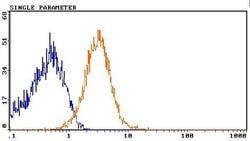
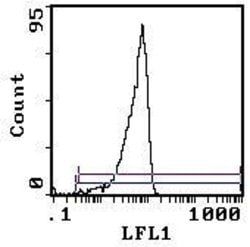
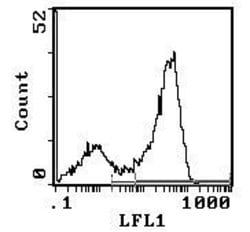
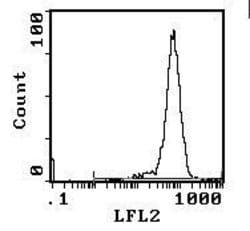
Flow Cytometry
Clone
Eat2
Conjugate
FITC
Gene
CD81
Gene Alias
26 kDa cell surface protein TAPA-1; CD 81 antigen; Cd81; CD81 antigen; CD81 antigen (target of antiproliferative antibody 1); CD81 molecule; CVID6; S5.7; Tapa1; Tapa-1; Target of the antiproliferative antibody 1; Tetraspanin28; tetraspanin-28; Tspan28; Tspan-28
Host Species
Armenian Hamster
Purification Method
Protein G
Regulatory Status
RUO
Gene ID (Entrez)
12520, 25621
Content And Storage
Store at 4°C short term. For long term storage, store at -20°C, avoiding freeze/thaw cycles. Store in the dark.
Form
Liquid
Related Products


Description
- CD81 (TAPA-1, target of anti-proliferative antibody-1) is a member of the tetraspanin family, is expressed on virtually all nucleated cells, but above all on germinal center B cells
- CD81 forms complexes with other tetraspanin proteins, integrins, coreceptors, MHC class I and II molecules, and influences adhesion, morphology, activation, proliferation and differentiation of B, T cells
- In muscles, CD81 promotes cell fusion and myotube maintenance
- CD81 has been also identified as a receptor for the hepatitis C virus
- Like members of the tetraspanin family that include CD9, CD37, CD53, CD63, and CD82, CD81 is a cell-surface proteins that are characterized by the presence of four hydrophobic domains
- The proteins mediate signal transduction events that play a role in the regulation of cell development, activation, growth and motility
- CD81 is a cell surface glycoprotein that is known to complex with integrins
- CD81 appears to promote muscle cell fusion and support myotube maintenance
- CD81 associates with CD19, CD21, Leu 13, and integrins on cell membrane and acts as a receptor for the envelope protein E2 of chronic hepatitis C virus
- Antibodies to CD81 have anti-proliferative effects on different lymphoid cell lines, particularly those derived from large cell lymphomas
- CD81 is also localized in the tumor-suppressor gene region and is a candidate gene for malignancies.