PIMA518007
H-2Ld Monoclonal Antibody (30-5-7S), PE, Invitrogen™
Manufacturer: Thermo Scientific
Select a Size
| Pack Size | SKU | Availability | Price |
|---|---|---|---|
| Each of 1 | PIMA518007-Each-of-1 | In Stock | ₹ 21,582.50 |
PIMA518007 - Each of 1
In Stock
Quantity
1
Base Price: ₹ 21,582.50
GST (18%): ₹ 3,884.85
Total Price: ₹ 25,467.35
Antigen
H-2Ld
Classification
Monoclonal
Concentration
0.1 mg/mL
Formulation
PBS with 4-5mg/mL BSA and 0.02% sodium azide
Gene Accession No.
P01897
Gene Symbols
H2-L
Immunogen
mouse H-2Ld (public determinant H-2.65)
Quantity
50 μg
Primary or Secondary
Primary
Target Species
Mouse
Product Type
Antibody
Isotype
IgG2a
Applications
Flow Cytometry
Clone
30-5-7S
Conjugate
PE
Gene
H2-L
Gene Alias
H2L; H-2L; H2-L; H2LD; histocompatibility 2, D region locus L; histocompatibility 2, L region
Host Species
Mouse
Purification Method
Protein G
Regulatory Status
RUO
Gene ID (Entrez)
14980
Content And Storage
4° C, do not freeze
Form
Liquid
Related Products
Description
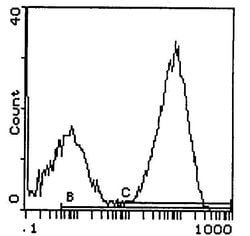
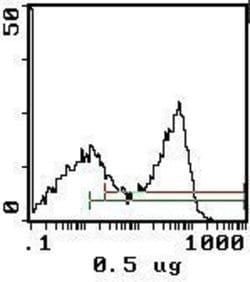
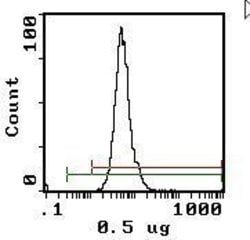
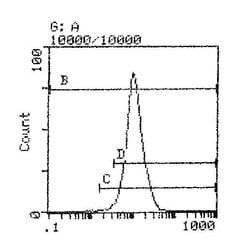
- MA5-18007 targets H-2Ld in FACS applications and shows reactivity with Mouse samples
- The MA5-18007 immunogen is mouse H-2Ld (public determinant H-2.65)
- MHC Class I (H-2Ld) is a protein complex located on the surface of cells in vertebrates
- Its main function is to present peptides derived from intracellular proteins to T cells for immune recognition
- The structure of MHC Class I (H-2Ld) consists of a heavy chain, beta-2 microglobulin, and a peptide-binding groove that interacts with antigenic peptides
- The location of MHC Class I (H-2Ld) varies depending on the cell type, but it is typically found on the surface of nucleated cells
- HLA and MHC antibodies play a significant role in Immunopeptidomics, facilitating the identification and characterization of neoantigens through high-performance liquid chromatography coupled to tandem Mass Spectrometry.