RNF144B Monoclonal Antibody (OTI9H10), Invitrogen™
Manufacturer: Thermo Scientific
Select a Size
| Pack Size | SKU | Availability | Price |
|---|---|---|---|
| Each of 1 | PIMA524997-Each-of-1 | In Stock | ₹ 52,198.50 |
PIMA524997 - Each of 1
In Stock
Quantity
1
Base Price: ₹ 52,198.50
GST (18%): ₹ 9,395.73
Total Price: ₹ 61,594.23
Antigen
RNF144B
Classification
Monoclonal
Concentration
0.8 mg/mL
Formulation
PBS with 1% BSA, 50% glycerol and 0.02% sodium azide; pH 7.3
Gene Accession No.
Q7Z419
Gene Symbols
RNF144B
Immunogen
Human recombinant protein fragment corresponding to amino acids 1-256 of RNF144B produced in E. coli.
Quantity
100μL
Primary or Secondary
Primary
Target Species
Human
Product Type
Antibody
Isotype
IgG2b
Applications
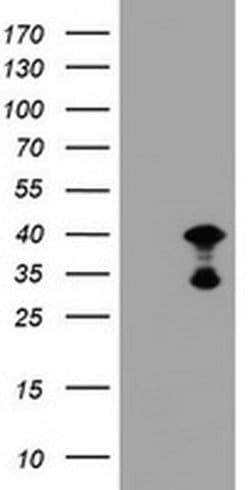
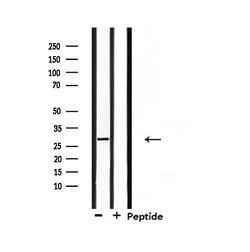
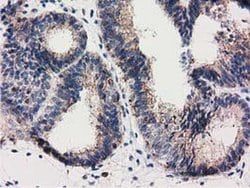
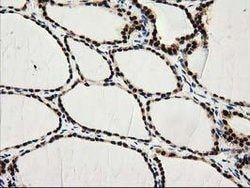
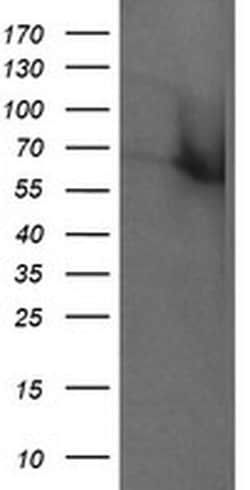
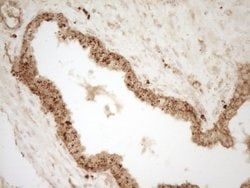
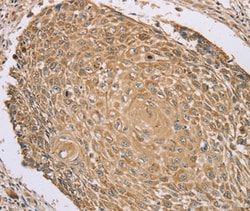
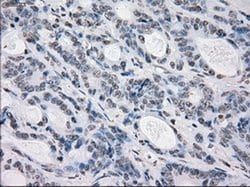
Flow Cytometry, Immunocytochemistry, Immunohistochemistry (Paraffin), Western Blot
Clone
OTI9H10
Conjugate
Unconjugated
Gene
RNF144B
Gene Alias
bA528A10.3; BC025007; E130105P19Rik; E3 ubiquitin-protein ligase RNF144B; IBR domain containing 2; IBR domain-containing protein 2; IBRDC2; p53-inducible RING finger protein; p53RFP; PIR2; RING finger protein 144B; Rnf144b
Host Species
Mouse
Purification Method
Affinity Chromatography
Regulatory Status
RUO
Gene ID (Entrez)
255488
Content And Storage
-20° C, Avoid Freeze/Thaw Cycles
Form
Liquid
Related Products
Description
- E3 ubiquitin-protein ligase which accepts ubiquitin from E2 ubiquitin-conjugating enzymes UBE2L3 and UBE2L6 in the form of a thioester and then directly transfers the ubiquitin to targeted substrates such as LCMT2, thereby promoting their degradation
- Induces apoptosis via a p53/TP53-dependent but caspase-independent mechanism
- However, its overexpression also produces a decrease of the ubiquitin-dependent stability of BAX, a pro-apoptotic protein, μgtimately leading to protection of cell death; But, it is not an anti-apoptotic protein per se.