HSPB8 Monoclonal Antibody (OTI1E3), Invitrogen™
Manufacturer: Thermo Scientific
Select a Size
| Pack Size | SKU | Availability | Price |
|---|---|---|---|
| Each of 1 | PIMA525112-Each-of-1 | In Stock | ₹ 52,198.50 |
PIMA525112 - Each of 1
In Stock
Quantity
1
Base Price: ₹ 52,198.50
GST (18%): ₹ 9,395.73
Total Price: ₹ 61,594.23
Antigen
HSPB8
Classification
Monoclonal
Concentration
0.88 mg/mL
Formulation
PBS with 1% BSA, 50% glycerol and 0.02% sodium azide; pH 7.3
Gene Accession No.
Q9EPX0, Q9UJY1
Gene Symbols
HSPB8
Immunogen
Full length human recombinant protein of HSPB8 produced in HEK293T cell
Quantity
100μL
Primary or Secondary
Primary
Target Species
Human, Rat
Product Type
Antibody
Isotype
IgG2a
Applications
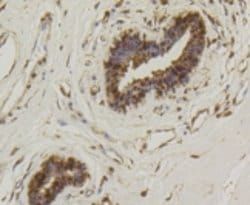
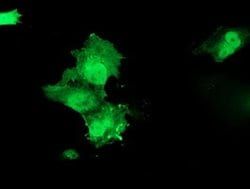
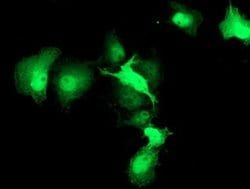
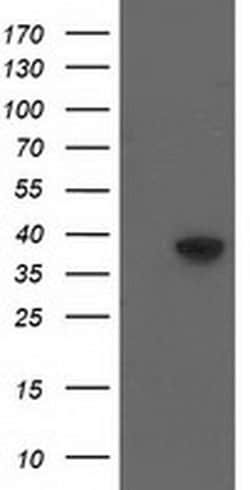
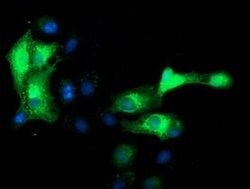
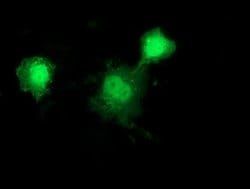
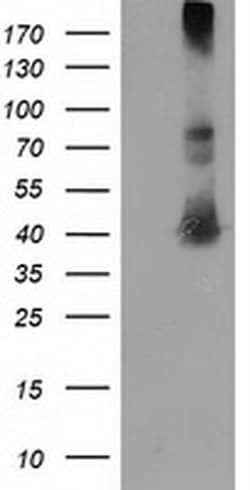
Flow Cytometry, Immunocytochemistry, Western Blot
Clone
OTI1E3
Conjugate
Unconjugated
Gene
HSPB8
Gene Alias
Alpha-crystallin C chain; AU018630; AW413033; CMT2L; Cryac; crystallin, alpha C; D5Ucla4; DHMN 2; DHMN2; E2IG1; E2-induced gene 1 protein; H11; H11K; heat shock 22kDa protein 8; heat shock 27kDa protein 8; Heat shock protein; heat shock protein 8; heat shock protein B8; heat shock protein beta-8; heat shock protein family B (small) member 8; HMN 2; HMN2; HMN2A; HSB8; HSP; HSP20-like; Hsp22; HSPB 8; Hspb8; OTTHUMP00000239768; PP1629; Protein kinase H11; small stress protein-like protein HSP22
Host Species
Mouse
Purification Method
Affinity Chromatography
Regulatory Status
RUO
Gene ID (Entrez)
113906, 26353
Content And Storage
-20° C, Avoid Freeze/Thaw Cycles
Form
Liquid
Related Products

Description
- The protein encoded by this gene belongs to the superfamily of small heat-shock proteins containing a conservative alpha-crystallin domain at the C-terminal part of the molecule
- The expression of this gene in induced by estrogen in estrogen receptor-positive breast cancer cells, and this protein also functions as a chaperone in association with Bag3, a stimulator of macroautophagy
- Thus, this gene appears to be involved in regulation of cell proliferation, apoptosis, and carcinogenesis, and mutations in this gene have been associated with different neuromuscular diseases, including Charcot-Marie-Tooth disease.