QPRT Monoclonal Antibody (OTI4E5), Invitrogen™
Manufacturer: Thermo Scientific
Select a Size
| Pack Size | SKU | Availability | Price |
|---|---|---|---|
| Each of 1 | PIMA525198-Each-of-1 | In Stock | ₹ 52,198.50 |
PIMA525198 - Each of 1
In Stock
Quantity
1
Base Price: ₹ 52,198.50
GST (18%): ₹ 9,395.73
Total Price: ₹ 61,594.23
Antigen
QPRT
Classification
Monoclonal
Concentration
0.63 mg/mL
Formulation
PBS with 1% BSA, 50% glycerol and 0.02% sodium azide; pH 7.3
Gene Accession No.
Q15274
Gene Symbols
QPRT
Immunogen
Full length human recombinant protein of QPRT produced in HEK293T cell
Quantity
100μL
Primary or Secondary
Primary
Target Species
Human
Product Type
Antibody
Isotype
IgG2b
Applications
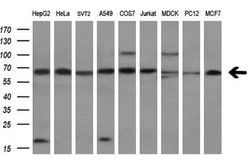
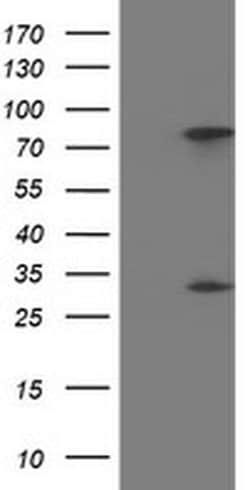
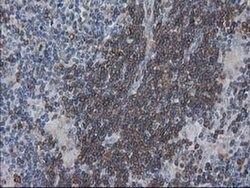
Flow Cytometry, Immunocytochemistry, Western Blot
Clone
OTI4E5
Conjugate
Unconjugated
Gene
QPRT
Gene Alias
2410027J01Rik; AI647766; epididymis secretory sperm binding protein Li 90n; HEL-S-90n; nicotinate-nucleotide pyrophosphorylase; nicotinate-nucleotide pyrophosphorylase (carboxylating); nicotinate-nucleotide pyrophosphorylase [carboxylating]; QAPRTase; QPRT; QPRTase; quinolinate phosphoribosyltransferase; Quinolinate phosphoribosyltransferase [decarboxylating]
Host Species
Mouse
Purification Method
Affinity Chromatography
Regulatory Status
RUO
Gene ID (Entrez)
23475
Content And Storage
-20° C, Avoid Freeze/Thaw Cycles
Form
Liquid
Related Products

Description
- QPRT gene encodes a key enzyme in catabolism of quinolinate, an intermediate in the tryptophan-nicotinamide adenine dinucleotide pathway
- Quinolinate acts as a most potent endogenous exitotoxin to neurons
- Elevation of quinolinate levels in the brain has been linked to the pathogenesis of neurodegenerative disorders such as epilepsy, Alzheimer's disease, and Huntington's disease
- Alternative splicing results in multiple transcript variants.