HAND1 Monoclonal Antibody (OTI1G10), Invitrogen™
Manufacturer: Thermo Scientific
Select a Size
| Pack Size | SKU | Availability | Price |
|---|---|---|---|
| Each of 1 | PIMA525494-Each-of-1 | In Stock | ₹ 52,554.50 |
PIMA525494 - Each of 1
In Stock
Quantity
1
Base Price: ₹ 52,554.50
GST (18%): ₹ 9,459.81
Total Price: ₹ 62,014.31
Antigen
HAND1
Classification
Monoclonal
Concentration
1 mg/mL
Formulation
PBS with 1% BSA, 50% glycerol and 0.02% sodium azide; pH 7.3
Gene Accession No.
O96004
Gene Symbols
HAND1
Immunogen
Full length human recombinant protein of HAND1 produced in E.coli
Quantity
100μL
Primary or Secondary
Primary
Target Species
Human
Product Type
Antibody
Isotype
IgG2b
Applications
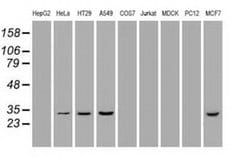
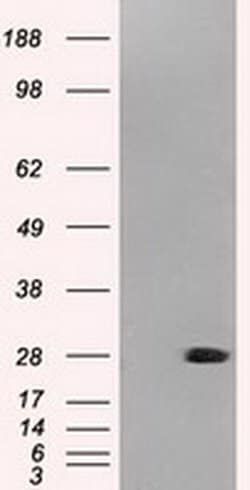
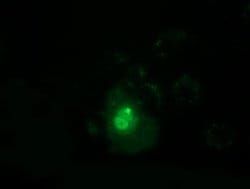
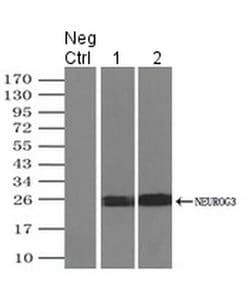
Flow Cytometry, Immunocytochemistry, Western Blot
Clone
OTI1G10
Conjugate
Unconjugated
Gene
HAND1
Gene Alias
bHLHa27; Class A basic helix-loop-helix protein 27; eHAND; Ehand1; extraembryonic tissues, heart, autonomic nervous system and neural crest derivatives-expressed protein 1; HAND1; heart and neural crest derivatives expressed 1; heart and neural crest derivatives expressed transcript 1; heart- and neural crest derivatives-expressed protein 1; Helix-loop-helix transcription factor expressed in extraembryonic mesoderm and trophoblast; Hxt; Th1; Thing1; thing-1
Host Species
Mouse
Purification Method
Affinity Chromatography
Regulatory Status
RUO
Gene ID (Entrez)
9421
Content And Storage
-20° C, Avoid Freeze/Thaw Cycles
Form
Liquid
Related Products

Description
- HAND1 belongs to the basic helix-loop-helix family of transcription factors
- This gene product is one of two closely related family members, the HAND proteins, which are asymmetrically expressed in the developing ventricular chambers and play an essential role in cardiac morphogenesis
- Working in a complementary fashion, they function in the formation of the right ventricle and aortic arch arteries, implicating them as mediators of congenital heart disease
- In addition, it has been suggested that this transcription factor may be required for early trophoblast differentiation.