Hex Monoclonal Antibody (OTI3C4), Invitrogen™
Manufacturer: Thermo Scientific
Select a Size
| Pack Size | SKU | Availability | Price |
|---|---|---|---|
| Each of 1 | PIMA524881-Each-of-1 | In Stock | ₹ 52,198.50 |
PIMA524881 - Each of 1
In Stock
Quantity
1
Base Price: ₹ 52,198.50
GST (18%): ₹ 9,395.73
Total Price: ₹ 61,594.23
Antigen
Hex
Classification
Monoclonal
Concentration
1 mg/mL
Formulation
PBS with 1% BSA, 50% glycerol and 0.02% sodium azide; pH 7.3
Gene Accession No.
Q03014
Gene Symbols
HHEX
Immunogen
Recombinant fragment expressed in E.coli corresponding to amino acids 100-270 of Hex.
Quantity
100μL
Primary or Secondary
Primary
Target Species
Human
Product Type
Antibody
Isotype
IgG2a
Applications
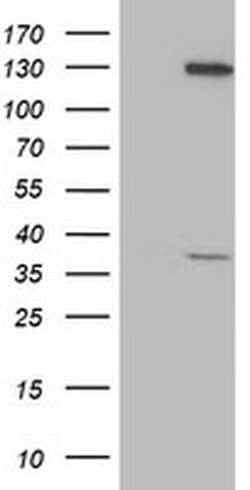
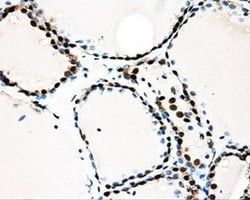
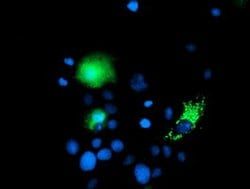
Immunocytochemistry, Western Blot
Clone
OTI3C4
Conjugate
Unconjugated
Gene
HHEX
Gene Alias
hematopoietically expressed homeobox; hematopoietically expressed homeobox, related sequence 2; hematopoietically-expressed homeobox protein Hhex; HEX; Hex1; HHEX; Hhex-rs2; HMPH; homeobox; homeobox protein HEX; Homeobox protein PRH; homeobox, hematopoietically expressed; HOX11L-PEN; mHex; Prh; Prhx; proline-rich homeodomain-containing transcription factor
Host Species
Mouse
Purification Method
Affinity Chromatography
Regulatory Status
RUO
Gene ID (Entrez)
3087
Content And Storage
-20° C, Avoid Freeze/Thaw Cycles
Form
Liquid
Related Products
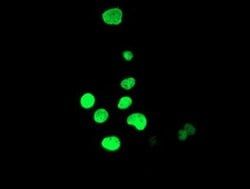
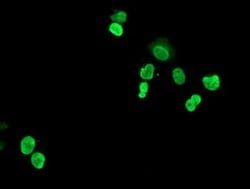
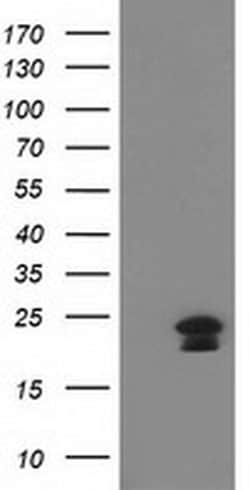
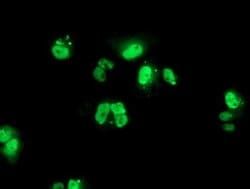

Description
- HHEX is a member of the homeobox family of transcription factors, many of which are involved in developmental processes
- Expression in specific hematopoietic lineages suggests that this protein may play a role in hematopoietic differentiation
- Establishes anterior identity at two levels 1) acts early to enhance canonical WNT-signaling by repressing expression of TLE4 and 2) acts later to inhibit NODAL-signaling by directly targeting NODAL.