BAIAP2 Monoclonal Antibody (OTI 1D9), Invitrogen™
Manufacturer: Thermo Scientific
Select a Size
| Pack Size | SKU | Availability | Price |
|---|---|---|---|
| Each of 1 | PIMA525560-Each-of-1 | In Stock | ₹ 54,201.00 |
PIMA525560 - Each of 1
In Stock
Quantity
1
Base Price: ₹ 54,201.00
GST (18%): ₹ 9,756.18
Total Price: ₹ 63,957.18
Antigen
BAIAP2
Classification
Monoclonal
Concentration
0.65 mg/mL
Formulation
PBS with 1% BSA, 50% glycerol and 0.02% sodium azide; pH 7.3
Gene Accession No.
Q9UQB8
Gene Symbols
BAIAP2
Immunogen
Full length human recombinant protein of BAIAP2 produced in HEK293T cell
Quantity
100μL
Primary or Secondary
Primary
Target Species
Human
Product Type
Antibody
Isotype
IgG1
Applications
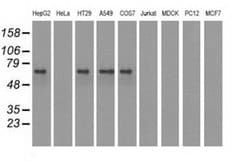
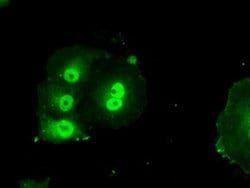
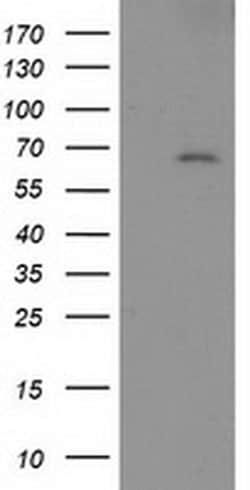
Flow Cytometry, Immunocytochemistry, Immunohistochemistry (Paraffin), Western Blot
Clone
OTI 1D9
Conjugate
Unconjugated
Gene
BAIAP2
Gene Alias
BAI1 associated protein 2; BAI1-associated protein 2; BAIAP2; BAI-associated protein 2; BAP2; brain-specific angiogenesis inhibitor 1-associated protein 2; Fas ligand-associated factor 3; FLAF3; insulin receptor substrate 53; insulin receptor substrate of 53 kDa; insulin receptor substrate p53; insulin receptor substrate p53/p58; Insulin receptor substrate protein of 53 kDa; insulin receptor tyrosine kinase 53 kDa substrate; Insulin receptor tyrosine kinase substrate protein p53; IRS-58; IRSp53; IRSp53/58; R75030
Host Species
Mouse
Purification Method
Affinity Chromatography
Regulatory Status
RUO
Gene ID (Entrez)
10458
Content And Storage
-20° C, Avoid Freeze/Thaw Cycles
Form
Liquid
Related Products

Description
- The protein encoded by this gene has been identified as a brain-specific angiogenesis inhibitor (BAI1)-binding protein
- This adaptor protein links membrane bound G-proteins to cytoplasmic effector proteins
- This protein functions as an insulin receptor tyrosine kinase substrate and suggests a role for insulin in the central nervous system
- It also associates with a downstream effector of Rho small G proteins, which is associated with the formation of stress fibers and cytokinesis
- This protein is involved in lamellipodia and filopodia formation in motile cells and may affect neuronal growth-cone guidance
- This protein has also been identified as interacting with the dentatorubral-pallidoluysian atrophy gene, which is associated with an autosomal dominant neurodegenerative disease
- Alternative splicing results in multiple transcript variants encoding distinct isoforms.