NR0B2 Monoclonal Antibody (OTI8E5), Invitrogen™
Manufacturer: Thermo Scientific
Select a Size
| Pack Size | SKU | Availability | Price |
|---|---|---|---|
| Each of 1 | PIMA526790-Each-of-1 | In Stock | ₹ 52,198.50 |
PIMA526790 - Each of 1
In Stock
Quantity
1
Base Price: ₹ 52,198.50
GST (18%): ₹ 9,395.73
Total Price: ₹ 61,594.23
Antigen
NR0B2
Classification
Monoclonal
Concentration
1 mg/mL
Formulation
PBS with 1% BSA, 50% glycerol and 0.02% sodium azide; pH 7.3
Gene Accession No.
Q15466
Gene Symbols
NR0B2
Immunogen
Full length human recombinant protein of NR0B2 produced in E.coli
Quantity
100μL
Primary or Secondary
Primary
Target Species
Human
Product Type
Antibody
Isotype
IgG1
Applications
Immunohistochemistry (Paraffin), Western Blot
Clone
OTI8E5
Conjugate
Unconjugated
Gene
NR0B2
Gene Alias
Nr0b2; Nr0b2a; nuclear receptor SHP; nuclear receptor subfamily 0 group B member 2; nuclear receptor subfamily 0, group B, member 2; orphan nuclear receptor SHP; SHP; SHP1; SHP-1; small heterodimer partner; small heterodimer partner homologue
Host Species
Mouse
Purification Method
Affinity Chromatography
Regulatory Status
RUO
Gene ID (Entrez)
8431
Content And Storage
-20° C, Avoid Freeze/Thaw Cycles
Form
Liquid
Related Products
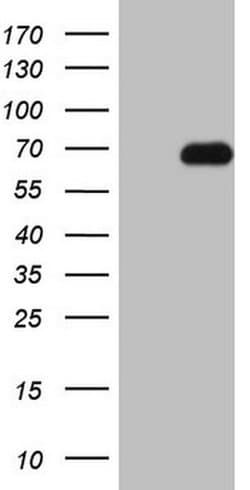
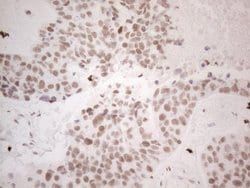
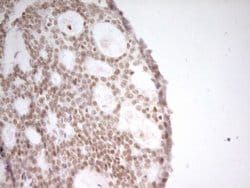
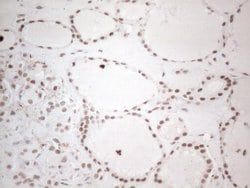
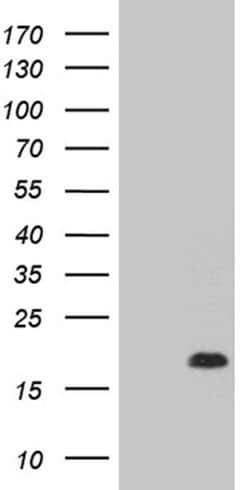
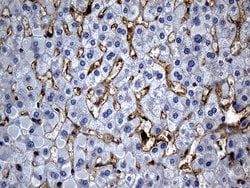
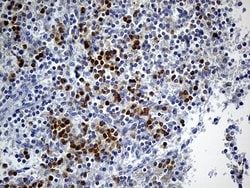
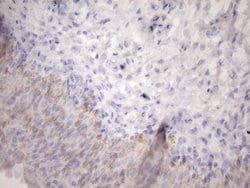
Description
- The protein encoded by this gene is an unusual orphan receptor that contains a putative ligand-binding domain but lacks a conventional DNA-binding domain
- The gene product is a member of the nuclear hormone receptor family, a group of transcription factors regulated by small hydrophobic hormones, a subset of which do not have known ligands and are referred to as orphan nuclear receptors
- The protein has been shown to interact with retinoid and thyroid hormone receptors, inhibiting their ligand-dependent transcriptional activation
- In addition, interaction with estrogen receptors has been demonstrated, leading to inhibition of function
- Studies suggest that the protein represses nuclear hormone receptor-mediated transactivation via two separate steps: competition with coactivators and the direct effects of its transcriptional repressor function.