Apolipoprotein H Monoclonal Antibody (OTI4A11), Invitrogen™
Manufacturer: Thermo Scientific
Select a Size
| Pack Size | SKU | Availability | Price |
|---|---|---|---|
| Each of 1 | PIMA526845-Each-of-1 | In Stock | ₹ 52,198.50 |
PIMA526845 - Each of 1
In Stock
Quantity
1
Base Price: ₹ 52,198.50
GST (18%): ₹ 9,395.73
Total Price: ₹ 61,594.23
Antigen
Apolipoprotein H
Classification
Monoclonal
Concentration
1 mg/mL
Formulation
PBS with 1% BSA, 50% glycerol and 0.02% sodium azide; pH 7.3
Gene Accession No.
P02749
Gene Symbols
APOH
Immunogen
Human recombinant protein fragment corresponding to amino acids 120-345 of APOH produced in E.coli
Quantity
100μL
Primary or Secondary
Primary
Target Species
Human
Product Type
Antibody
Isotype
IgG1
Applications
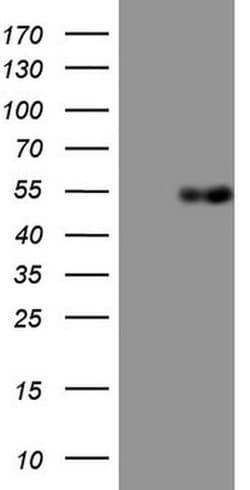
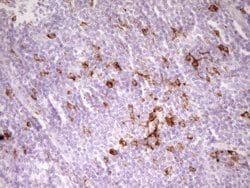
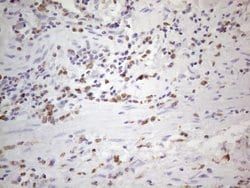
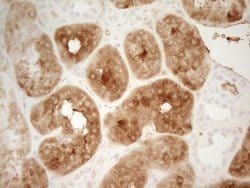
Immunohistochemistry (Paraffin), Western Blot
Clone
OTI4A11
Conjugate
Unconjugated
Gene
APOH
Gene Alias
2GPI; activated protein C-binding protein; Anticardiolipin cofactor; APC inhibitor; APOH; Apo-H; Apolipoprotein H; apolipoprotein H (beta-2-glycoprotein I); B2G1; B2GP1; B2GPI; beta(2)GPI; beta-2-glycoprotein 1; Beta-2-glycoprotein I; beta-2-GPI; beta2-GPI; BG
Host Species
Mouse
Purification Method
Affinity Chromatography
Regulatory Status
RUO
Gene ID (Entrez)
350
Content And Storage
-20° C, Avoid Freeze/Thaw Cycles
Form
Liquid
Related Products
Description
- Apolipoprotein H has been implicated in a variety of physiologic pathways including lipoprotein metabolism, coagulation, and the production of antiphospholipid autoantibodies
- APOH may be a required cofactor for anionic phospholipid binding by the antiphospholipid autoantibodies found in sera of many patients with lupus and primary antiphospholipid syndrome, but it does not seem to be required for the reactivity of antiphospholipid autoantibodies associated with infections.