INAVA Monoclonal Antibody (OTI6A6), Invitrogen™
Manufacturer: Thermo Scientific
Select a Size
| Pack Size | SKU | Availability | Price |
|---|---|---|---|
| Each of 1 | PIMA526848-Each-of-1 | In Stock | ₹ 52,198.50 |
PIMA526848 - Each of 1
In Stock
Quantity
1
Base Price: ₹ 52,198.50
GST (18%): ₹ 9,395.73
Total Price: ₹ 61,594.23
Antigen
INAVA
Classification
Monoclonal
Concentration
1 mg/mL
Formulation
PBS with 1% BSA, 50% glycerol and 0.02% sodium azide; pH 7.3
Gene Accession No.
Q3KP66
Gene Symbols
C1orf106
Immunogen
Human recombinant protein fragment corresponding to amino acids 1-270 of C1ORF106 produced in E.coli
Quantity
100μL
Primary or Secondary
Primary
Target Species
Human
Product Type
Antibody
Isotype
IgG1
Applications
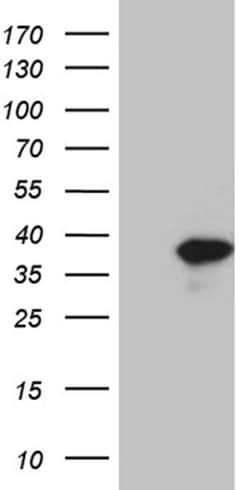
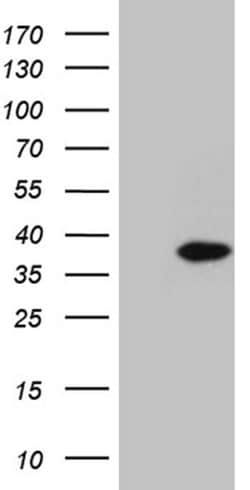
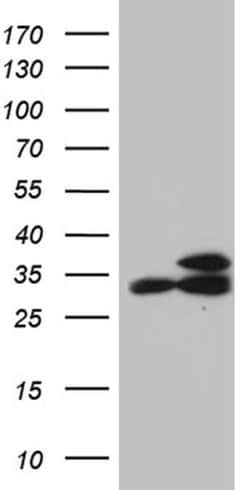
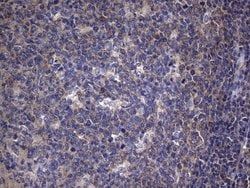
Immunohistochemistry (Paraffin), Western Blot
Clone
OTI6A6
Conjugate
Unconjugated
Gene
C1orf106
Gene Alias
1700034M08Rik; 4933426C09Rik; 5730559C18Rik; AI586180; C1orf106; chromosome 1 open reading frame 106; D1Mgi54; Inava; Innate immunity activator protein; RGD1311892; RIKEN cDNA 5730559C18 gene; similar to hypothetical protein FLJ10901; uncharacterized protein C1orf106; uncharacterized protein C1orf106 homolog
Host Species
Mouse
Purification Method
Affinity Chromatography
Regulatory Status
RUO
Gene ID (Entrez)
55765
Content And Storage
-20° C, Avoid Freeze/Thaw Cycles
Form
Liquid
Related Products
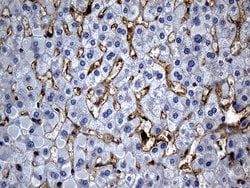


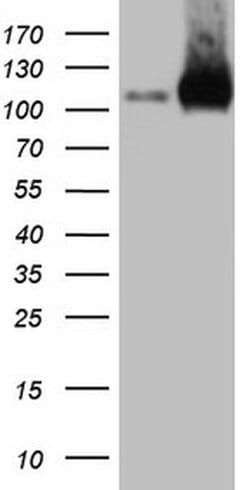
Description
- Expressed in peripheral macrophages and intestinal myeloid-derived cells, is required for optimal PRR (pattern recognition receptor)-induced signaling, cytokine secretion, and bacterial clearance
- Upon stimulation of a broad range of PRRs (pattern recognition receptor) such as NOD2 or TLR2, TLR3, TLR4, TLR5, TLR7 and TLR9, associates with YWHAQ/14-3-3T, which in turn leads to the recruitment and activation of MAP kinases and NF-kappa-B signaling complexes that amplifies PRR-induced downstream signals and cytokine secretion (PubMed:28436939)
- In the intestine, regulates adherens junction stability by regulating the degradation of CYTH1 and CYTH2, probably acting as substrate cofactor for SCF E3 ubiquitin-protein ligase complexes
- Stabilizes adherens junctions by limiting CYTH1-dependent ARF6 activation (PubMed:29420262)
- [UniProt]