PIMA526916
FGF13 Monoclonal Antibody (OTI7E8), Invitrogen™
Manufacturer: Thermo Scientific
Select a Size
| Pack Size | SKU | Availability | Price |
|---|---|---|---|
| Each of 1 | PIMA526916-Each-of-1 | In Stock | ₹ 52,287.50 |
PIMA526916 - Each of 1
In Stock
Quantity
1
Base Price: ₹ 52,287.50
GST (18%): ₹ 9,411.75
Total Price: ₹ 61,699.25
Antigen
FGF13
Classification
Monoclonal
Concentration
1 mg/mL
Formulation
PBS with 1% BSA, 50% glycerol and 0.02% sodium azide; pH 7.3
Gene Accession No.
Q92913
Gene Symbols
FGF13
Immunogen
Full length human recombinant protein of FGF13 produced in E.coli
Quantity
100μL
Primary or Secondary
Primary
Target Species
Human
Product Type
Antibody
Isotype
IgG1
Applications
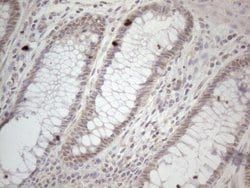
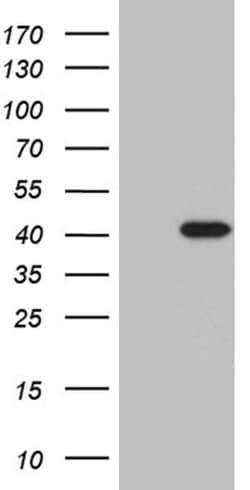
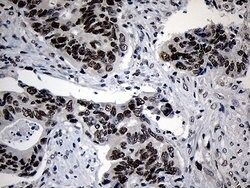
Immunohistochemistry (Paraffin), Western Blot
Clone
OTI7E8
Conjugate
Unconjugated
Gene
FGF13
Gene Alias
AFGF; ECGF; ECGFA; ECGFB; FGF; FGF 1; FGF alpha; FGF13; FGF-13; FGF13A; FGF2; FGFA; Fhf2; FHF-2; Fibroblast growth factor; fibroblast growth factor 13; Fibroblast growth factor homologous factor 2; GLIO703; HBGF 1; HBGF1
Host Species
Mouse
Purification Method
Affinity Chromatography
Regulatory Status
RUO
Gene ID (Entrez)
2258
Content And Storage
-20° C, Avoid Freeze/Thaw Cycles
Form
Liquid
Related Products
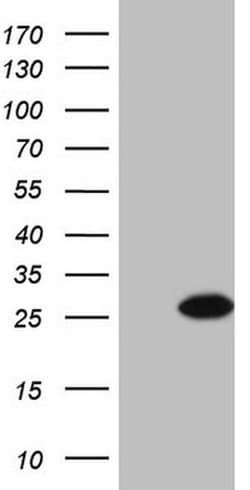
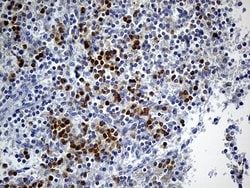

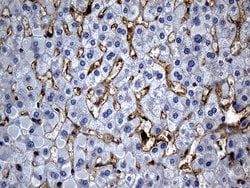
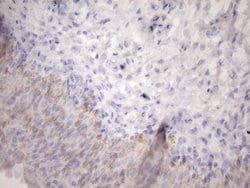
Description
- The protein encoded by this gene is a member of the fibroblast growth factor (FGF) family
- FGF family members possess broad mitogenic and cell survival activities, and are involved in a variety of biological processes, including embryonic development, cell growth, morphogenesis, tissue repair, tumor growth, and invasion
- This gene is located in a region on chromosome X, which is associated with Borjeson-Forssman-Lehmann syndrome (BFLS), making it a possible candidate gene for familial cases of the BFLS, and for other syndromal and nonspecific forms of X-linked mental retardation mapping to this region
- Alternative splicing of this gene at the 5' end results in several transcript variants encoding different isoforms with different N-termini.