PRRT2 Monoclonal Antibody (OTI9H8), Invitrogen™
Manufacturer: Thermo Scientific
Select a Size
| Pack Size | SKU | Availability | Price |
|---|---|---|---|
| Each of 1 | PIMA527223-Each-of-1 | In Stock | ₹ 52,287.50 |
PIMA527223 - Each of 1
In Stock
Quantity
1
Base Price: ₹ 52,287.50
GST (18%): ₹ 9,411.75
Total Price: ₹ 61,699.25
Antigen
PRRT2
Classification
Monoclonal
Concentration
1 mg/mL
Formulation
PBS with 1% BSA, 50% glycerol and 0.02% sodium azide; pH 7.3
Gene Accession No.
E9PUL5, Q7Z6L0
Gene Symbols
PRRT2
Immunogen
Human recombinant protein fragment corresponding to amino acids 152-268 of PRRT2 produced in E.coli
Quantity
100μL
Primary or Secondary
Primary
Target Species
Human, Mouse
Product Type
Antibody
Isotype
IgG1
Applications
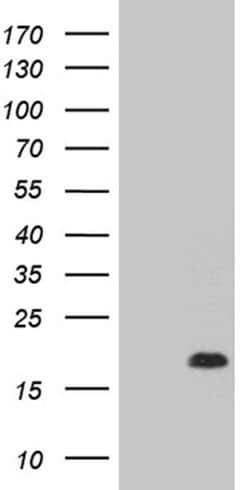
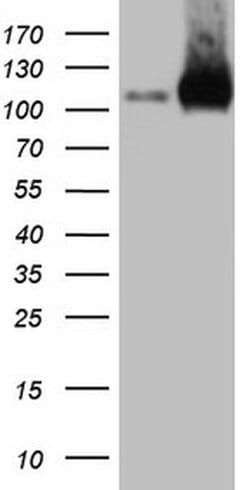
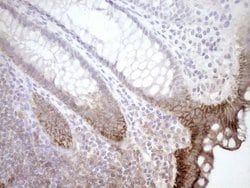
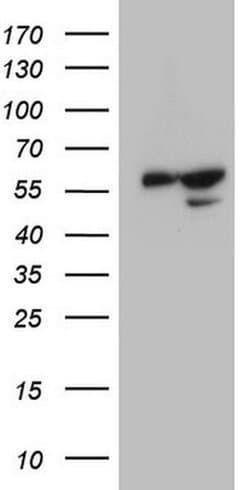
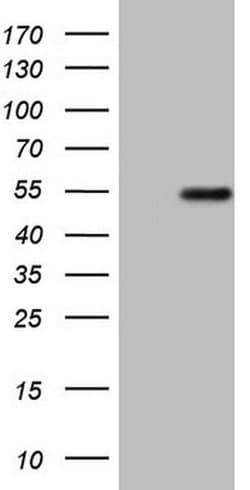
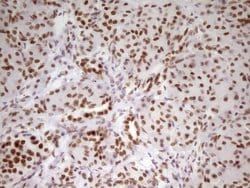
Immunohistochemistry (Paraffin), Western Blot
Clone
OTI9H8
Conjugate
Unconjugated
Gene
PRRT2
Gene Alias
1500031I19Rik; AI195361; BFIC2; BFIS2; Dispanin subfamily B member 3; DSPB3; dystonia 10; DYT10; EKD1; FICCA; ICCA; IFITMD1; infantile convulsions and paroxysmal choreoathetosis; interferon induced transmembrane protein domain containing 1; PKC; proline rich transmembrane protein 2; proline-rich transmembrane protein 2; PRRT2; RGD1564195
Host Species
Mouse
Purification Method
Affinity Chromatography
Regulatory Status
RUO
Gene ID (Entrez)
112476, 69017
Content And Storage
-20° C, Avoid Freeze/Thaw Cycles
Form
Liquid
Related Products


Description
- The proline-rich transmembrane protein 2 (PRRT2) contains a proline-rich domain in its N-terminal half and is predominantly expressed in brain and spinal cord in embryonic and postnatal stages
- While little is known of the function of this protein, mutations in PRRT2 have been shown to be the causative gene of paroxysmal kinesigenic dyskinesia, which is characterized by recurrent, brief attacks of abnormal involuntary movements induced by sudden voluntary movements
- Recent studies have shown that PRRT2 may also be involved in some forms of benign familial infantile epilepsy (BFIE), an autosomal dominant epilepsy syndrome.