PPP4C Monoclonal Antibody (OTI2H7), Invitrogen™
Manufacturer: Thermo Scientific
Select a Size
| Pack Size | SKU | Availability | Price |
|---|---|---|---|
| Each of 1 | PIMA527270-Each-of-1 | In Stock | ₹ 52,287.50 |
PIMA527270 - Each of 1
In Stock
Quantity
1
Base Price: ₹ 52,287.50
GST (18%): ₹ 9,411.75
Total Price: ₹ 61,699.25
Antigen
PPP4C
Classification
Monoclonal
Concentration
1 mg/mL
Formulation
PBS with 1% BSA, 50% glycerol and 0.02% sodium azide; pH 7.3
Gene Accession No.
P60510
Gene Symbols
PPP4C
Immunogen
Full length human recombinant protein of PPP4C produced in E.coli
Quantity
100μL
Primary or Secondary
Primary
Target Species
Human
Product Type
Antibody
Isotype
IgG2a
Applications
Immunohistochemistry (Paraffin), Western Blot
Clone
OTI2H7
Conjugate
Unconjugated
Gene
PPP4C
Gene Alias
1110002D08Rik; AU016079; P PPX; pp4; PP4C; PPH3; Ppp4; PPP4C; PPX; PP-X; protein phosphatase 4 (formerly X), catalytic subunit; protein phosphatase 4 catalytic subunit; protein phosphatase 4, catalytic subunit; protein phosphatase X; protein phosphatase X, catalytic subunit; serine/threonine-protein phosphatase 4 catalytic subunit
Host Species
Mouse
Purification Method
Affinity Chromatography
Regulatory Status
RUO
Gene ID (Entrez)
5531
Content And Storage
-20° C, Avoid Freeze/Thaw Cycles
Form
Liquid
Related Products
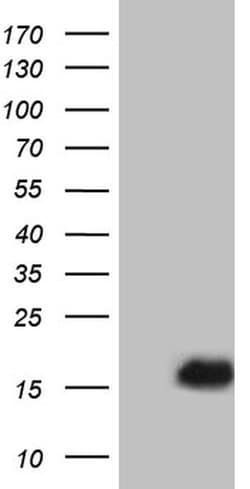
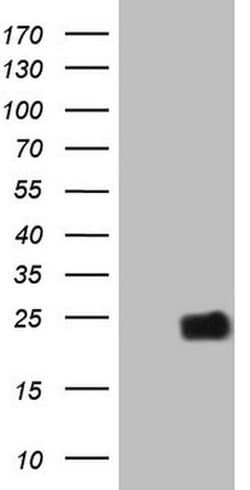
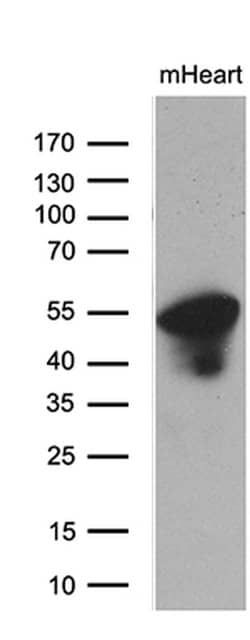
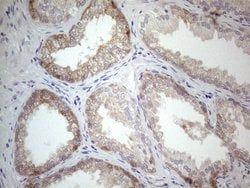
Description
- The protein encoded by this gene is one subunit of a trimeric complex, forming a highly conserved transcription factor that binds to CCAAT motifs in the promoter regions in a variety of genes
- Subunit A associates with a tight dimer composed of the B and C subunits, resulting in a trimer that binds to DNA with high specificity and affinity
- The sequence specific interactions of the complex are made by the A subunit, suggesting a role as the regulatory subunit
- In addition, there is evidence of post-transcriptional regulation in this gene product, either by protein degradation or control of translation
- Further regulation is represented by alternative splicing in the glutamine-rich activation domain, with clear tissue-specific preferences for the two isoforms.