DUSP10 Monoclonal Antibody (OTI2H1), Invitrogen™
Manufacturer: Thermo Scientific
Select a Size
| Pack Size | SKU | Availability | Price |
|---|---|---|---|
| Each of 1 | PIMA526813-Each-of-1 | In Stock | ₹ 52,198.50 |
PIMA526813 - Each of 1
In Stock
Quantity
1
Base Price: ₹ 52,198.50
GST (18%): ₹ 9,395.73
Total Price: ₹ 61,594.23
Antigen
DUSP10
Classification
Monoclonal
Concentration
1 mg/mL
Formulation
PBS with 1% BSA, 50% glycerol and 0.02% sodium azide; pH 7.3
Gene Accession No.
Q9Y6W6
Gene Symbols
DUSP10
Immunogen
Human recombinant protein fragment corresponding to amino acids 180-482 of DUSP10 produced in E.coli
Quantity
100μL
Primary or Secondary
Primary
Target Species
Human
Product Type
Antibody
Isotype
IgG2a
Applications
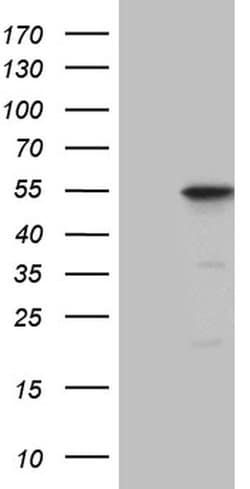
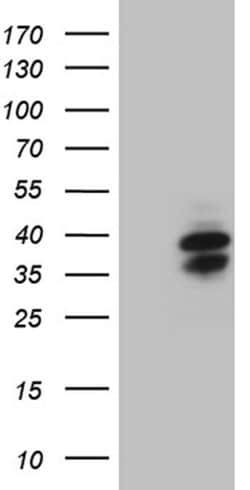
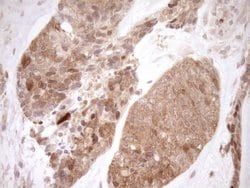
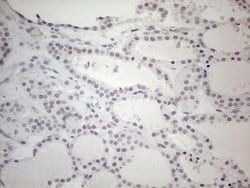
Immunohistochemistry (Paraffin), Western Blot
Clone
OTI2H1
Conjugate
Unconjugated
Gene
DUSP10
Gene Alias
2610306G15Rik; AI158871; dual specificity phosphatase 10; dual specificity phosphatase MKP-5; dual specificity protein phosphatase 10; Dusp10; MAP kinase phosphatase 5; mitogen-activated protein kinase phosphatase 5; Mkp5; MKP-5; serine/threonine specific protein phosphatase
Host Species
Mouse
Purification Method
Affinity Chromatography
Regulatory Status
RUO
Gene ID (Entrez)
11221
Content And Storage
-20° C, Avoid Freeze/Thaw Cycles
Form
Liquid
Related Products

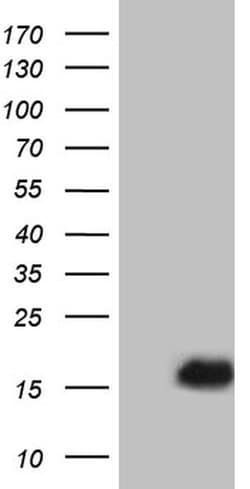
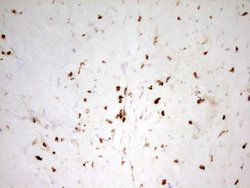
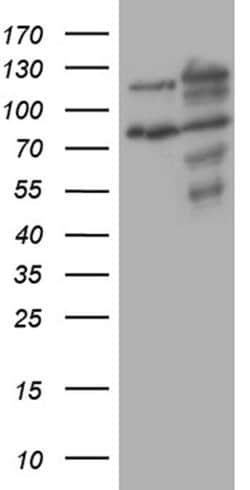
Description
- Microsomal long and very long chain fatty acid elongation uses malonyl-CoA as the 2-carbon donor and consists of 4 sequential reactions
- GPSN2 catalyzes the final step, reducing trans-2, 3-enoyl-CoA to saturated acyl-CoA
- Microsomal long and very long chain fatty acid elongation uses malonyl-CoA as the 2-carbon donor and consists of 4 sequential reactions
- TER catalyzes the final step, reducing trans-2, 3-enoyl-CoA to saturated acyl-CoA.