PIMA527436
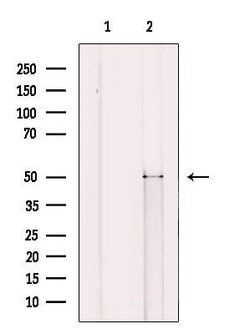
Cytohesin 4 Monoclonal Antibody (OTI4A5), Invitrogen™
Manufacturer: Thermo Scientific
Select a Size
| Pack Size | SKU | Availability | Price |
|---|---|---|---|
| Each of 1 | PIMA527436-Each-of-1 | In Stock | ₹ 52,198.50 |
PIMA527436 - Each of 1
In Stock
Quantity
1
Base Price: ₹ 52,198.50
GST (18%): ₹ 9,395.73
Total Price: ₹ 61,594.23
Antigen
Cytohesin 4
Classification
Monoclonal
Concentration
1 mg/mL
Formulation
PBS with 1% BSA, 50% glycerol and 0.02% sodium azide; pH 7.3
Gene Accession No.
Q9UIA0
Gene Symbols
CYTH4
Immunogen
Full length human recombinant protein of CYTH4 produced in HEK293T cell
Quantity
100μL
Primary or Secondary
Primary
Target Species
Human
Product Type
Antibody
Isotype
IgG1
Applications
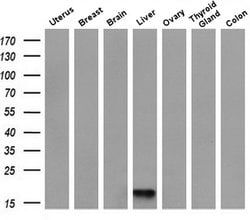
Immunohistochemistry (Paraffin), Western Blot
Clone
OTI4A5
Conjugate
Unconjugated
Gene
CYTH4
Gene Alias
CYT4; CYTH4; cytohesin 4; cytohesin-4; DJ63G5.1; PH, SEC7 and coiled-coil domain-containing protein 4; pleckstrin homology, Sec7 and coiled/coil domains 4; pleckstrin homology, Sec7 and coiled-coil domains 4; PSCD4
Host Species
Mouse
Purification Method
Affinity Chromatography
Regulatory Status
RUO
Gene ID (Entrez)
27128
Content And Storage
-20° C, Avoid Freeze/Thaw Cycles
Form
Liquid
Related Products


Description
- The protein encoded by this gene is a member of the PSCD family
- Members of this family have identical structural organization that consists of an N-terminal coiled-coil motif, a central Sec7 domain, and a C-terminal pleckstrin homology (PH) domain
- The coiled-coil motif is involved in homodimerization, the Sec7 domain contains guanine-nucleotide exchange protein (GEP) activity, and the PH domain interacts with phospholipids and is responsible for association of PSCDs with membranes
- Members of this family appear to mediate the regulation of protein sorting and membrane trafficking
- The encoded protein exhibits GEP activity in vitro with both ARF1 and ARF5 but is inactive with ARF6
- The structures of this gene and CYTH1 are very similar.