PIMA531855
PLD2 Monoclonal Antibody (8G1G2), Invitrogen™
Manufacturer: Thermo Scientific
Select a Size
| Pack Size | SKU | Availability | Price |
|---|---|---|---|
| Each of 1 | PIMA531855-Each-of-1 | In Stock | ₹ 49,350.50 |
PIMA531855 - Each of 1
In Stock
Quantity
1
Base Price: ₹ 49,350.50
GST (18%): ₹ 8,883.09
Total Price: ₹ 58,233.59
Antigen
PLD2
Classification
Monoclonal
Concentration
1 mg/mL
Formulation
PBS with 0.05% sodium azide
Gene Accession No.
O14939
Gene Symbols
Pld2
Immunogen
Purified recombinant fragment of human PLD2 (AA: 834-933) expressed in E. coli.
Quantity
100 μL
Primary or Secondary
Primary
Target Species
Human
Product Type
Antibody
Isotype
IgG1
Applications
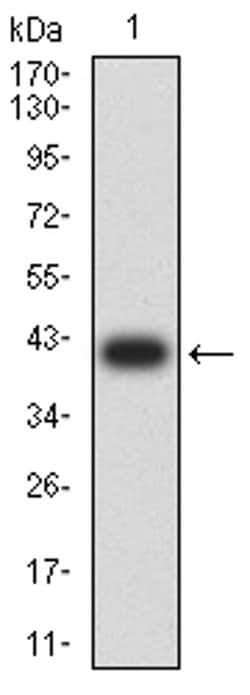
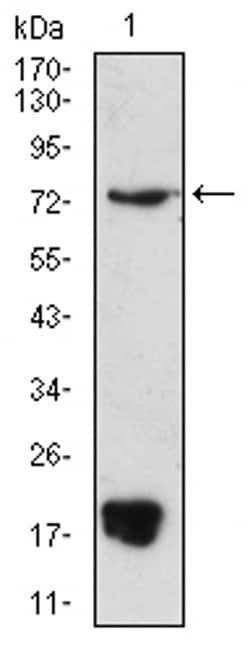
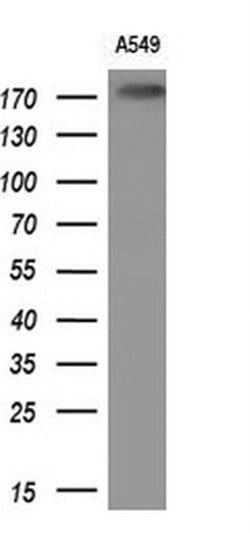
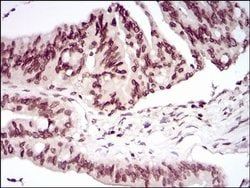
ELISA, Flow Cytometry, Western Blot
Clone
8G1G2
Conjugate
Unconjugated
Gene
Pld2
Gene Alias
choline phosphatase 2; hPLD2; phosphatidylcholine-hydrolyzing phospholipase D2; phospholipase D gene 2; phospholipase D2; PLD 2; PLD1C; PLD2; Pldc; rPLD2
Host Species
Mouse
Purification Method
Protein G
Regulatory Status
RUO
Gene ID (Entrez)
5338
Content And Storage
Store at 4°C short term. For long term storage, store at -20°C, avoiding freeze/thaw cycles.
Form
Liquid
Related Products



Description
- MA5-31855 has been tested in indirect ELISA
- PLD2 is a peripheral membrane protein belonging to phospholipase D family with a PH domain, two PLD phosphodiesterase domains and a PX (phox homology) domain that plays a regulatory rather than catalytic role
- PLD2 catalyzes the hydrolysis of phosphatidylcholine (PC) to produce phosphatidic acid and choline
- PLD2 may function in regulated secretion, signal-induced cytoskeletal regulation and/or endocytosis, transcriptional regulation, and cell cycle control
- It is usually stimulated by phosphatidylinositol 4,5-bisphosphate (PIP2) and activated by the ADP-ribosylation factor-1 (ARF-1)
- PLD2 is activated by agonist stimulation of both tyrosine kinase and G protein-coupled receptors and is also known to interact with EGFR and PIP5K1A
- PLD2, localized to plasma membrane caveolae, is ubiquitously expressed in most tissues.