THAP1 Monoclonal Antibody (2F1B4), Invitrogen™
Manufacturer: Thermo Scientific
Select a Size
| Pack Size | SKU | Availability | Price |
|---|---|---|---|
| Each of 1 | PIMA531932-Each-of-1 | In Stock | ₹ 49,350.50 |
PIMA531932 - Each of 1
In Stock
Quantity
1
Base Price: ₹ 49,350.50
GST (18%): ₹ 8,883.09
Total Price: ₹ 58,233.59
Antigen
THAP1
Classification
Monoclonal
Concentration
1 mg/mL
Formulation
PBS with 0.05% sodium azide
Gene Accession No.
Q9NVV9
Gene Symbols
Thap1
Immunogen
Purified recombinant fragment of human THAP1 (AA: 1-213) expressed in E. coli.
Quantity
100μL
Primary or Secondary
Primary
Target Species
Human
Product Type
Antibody
Isotype
IgG1
Applications
ELISA, Flow Cytometry, Western Blot
Clone
2F1B4
Conjugate
Unconjugated
Gene
Thap1
Gene Alias
4833431A01Rik; AW490810; DYT6; nuclear proapoptotic factor; THAP domain containing 1; THAP domain containing, apoptosis associated protein 1; THAP domain protein 1; THAP domain-containing apoptosis-associated protein 1; THAP domain-containing protein 1; THAP1
Host Species
Mouse
Purification Method
Protein G
Regulatory Status
RUO
Gene ID (Entrez)
55145
Content And Storage
Store at 4°C short term. For long term storage, store at -20°C, avoiding freeze/thaw cycles.
Form
Liquid
Related Products
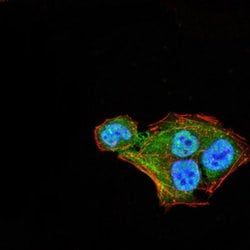
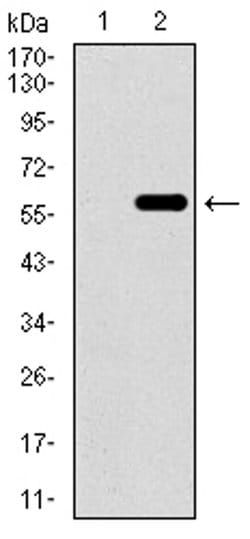

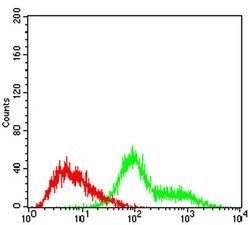
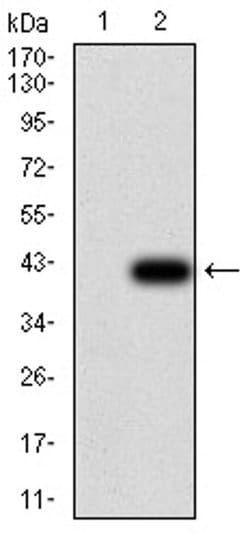
Description
- MA5-31932 has been tested in indirect ELISA
- DNA-binding transcription regulator that regulates endothelial cell proliferation and G1/S cell-cycle progression
- Specifically binds the 5'-[AT]NTNN[GT]GGCA[AGT]-3' core DNA sequence and acts by modulating expression of pRB-E2F cell-cycle target genes, including RRM1
- Component of a THAP1/THAP3-HCFC1-OGT complex that is required for the regulation of the transcriptional activity of RRM1
- May also have pro-apoptopic activity by potentiating both serum-withdrawal and TNF-induced apoptosis.