PIMA531943
TUBE1 Monoclonal Antibody (7G3B2), Invitrogen™
Manufacturer: Thermo Scientific
Select a Size
| Pack Size | SKU | Availability | Price |
|---|---|---|---|
| Each of 1 | PIMA531943-Each-of-1 | In Stock | ₹ 49,350.50 |
PIMA531943 - Each of 1
In Stock
Quantity
1
Base Price: ₹ 49,350.50
GST (18%): ₹ 8,883.09
Total Price: ₹ 58,233.59
Antigen
TUBE1
Classification
Monoclonal
Concentration
1 mg/mL
Formulation
PBS with 0.05% sodium azide
Gene Accession No.
Q9UJT0
Gene Symbols
TUBE1
Immunogen
Purified recombinant fragment of human TUBE1 (AA: 314-472) expressed in E. coli.
Quantity
100μL
Primary or Secondary
Primary
Target Species
Human
Product Type
Antibody
Isotype
IgG1
Applications
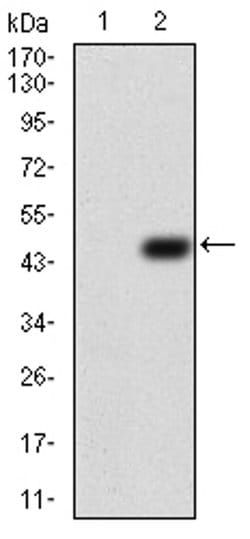
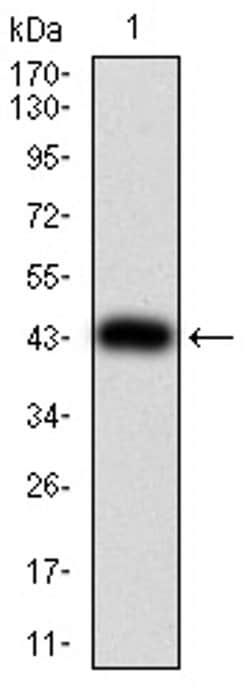
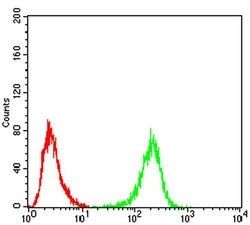
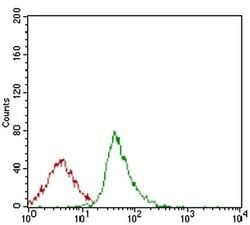
ELISA, Flow Cytometry, Western Blot
Clone
7G3B2
Conjugate
Unconjugated
Gene
TUBE1
Gene Alias
2310061K05Rik; AI551343; dJ142L7.2; epsilon-tubulin; epsilon-tubulin 1; FLJ22589; FLJ44203; RP1-142L7.1; TUBE; Tube1; Tubulin; tubulin epsilon 1; tubulin epsilon chain; tubulin, epsilon 1
Host Species
Mouse
Purification Method
Protein G
Regulatory Status
RUO
Gene ID (Entrez)
51175
Content And Storage
Store at 4°C short term. For long term storage, store at -20°C, avoiding freeze/thaw cycles.
Form
Liquid
Related Products


Description
- MA5-31943 has been tested in indirect ELISA
- Microtubules constitute one of the major components of eukaryotic cells cytoskeleton and are involved in many essential processes, including cell division, ciliary and flagellar motility and intracellular transport
- Microtubules of the eukaryotic cytoskeleton are composed of a heterodimer of α- and β-tubulin
- In addition to α- and β-tubulin, several other tubulins have been identified, bringing the number of distinct tubulin classes to seven
- Most of these tubulins have distinct subcellular localization and an emerging, diverse set of functions.