UCP3 Monoclonal Antibody (6B8C6), Invitrogen™
Manufacturer: Thermo Scientific
Select a Size
| Pack Size | SKU | Availability | Price |
|---|---|---|---|
| Each of 1 | PIMA531947-Each-of-1 | In Stock | ₹ 49,350.50 |
PIMA531947 - Each of 1
In Stock
Quantity
1
Base Price: ₹ 49,350.50
GST (18%): ₹ 8,883.09
Total Price: ₹ 58,233.59
Antigen
UCP3
Classification
Monoclonal
Concentration
1 mg/mL
Formulation
PBS with 0.05% sodium azide
Gene Accession No.
P55916
Gene Symbols
Ucp3
Immunogen
Purified recombinant fragment of human UCP3 (AA: 1-113 and 217-312) expressed in E. coli.
Quantity
100μL
Primary or Secondary
Primary
Target Species
Human
Product Type
Antibody
Isotype
IgG2a
Applications
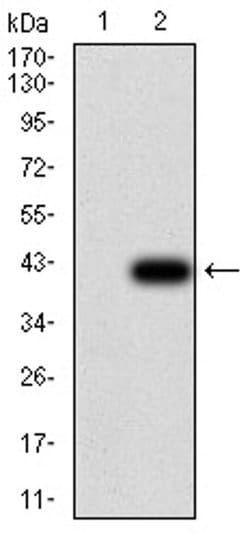
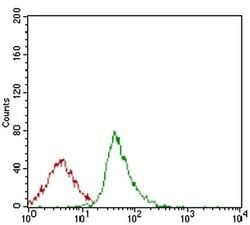
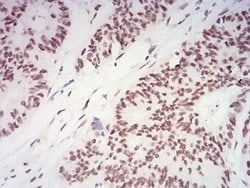
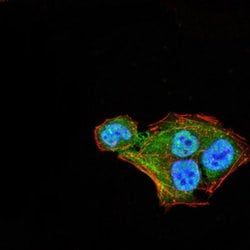
ELISA, Immunocytochemistry, Western Blot
Clone
6B8C6
Conjugate
Unconjugated
Gene
Ucp3
Gene Alias
AI645527; mitochondrial uncoupling protein 3; Slc25a9; solute carrier family 25 member 9; UCP 3; UCP3; UCP-3; uncoupling protein; uncoupling protein 3; uncoupling protein 3 (mitochondrial, proton carrier); uncoupling protein 3, mitochondrial
Host Species
Mouse
Purification Method
Protein G
Regulatory Status
RUO
Gene ID (Entrez)
7352
Content And Storage
Store at 4°C short term. For long term storage, store at -20°C, avoiding freeze/thaw cycles.
Form
Liquid
Related Products
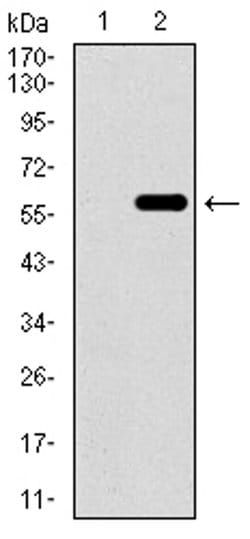


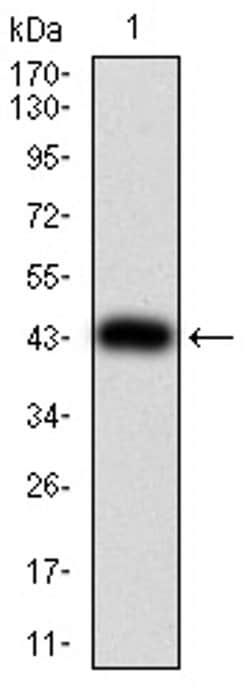
Description
- MA5-31947 has been tested in indirect ELISA
- The uncoupling protein UCP1 (formerly designated UCP) is an integral membrane protein unique to brown adipose tissue mitochondria
- UCP1 forms a dimer that acts as a proton channel, which can uncouple oxidative phosphorylation by dissipating the electrochemical potential across the inner mitochondrial membrane
- This process induces heat production in brown adipose tissue and is involved in regulation of body temperature and glucose metabolism
- UCP2 is a structurally related protein that also uncouples mitochondrial respiration
- It is more widely expressed in human and mouse tissues, including white adipose tissue and muscle, than is UCP1
- UCP2 is thought to play a role in body weight regulation
- An additional UCP family member, UCP3, is highly muscle specific and is possibly involved in the uncoupling of oxidative phosphorylation in skeletal muscle.