H2AK9ac Recombinant Rabbit Monoclonal Antibody (SR4-15), Invitrogen™
Manufacturer: Thermo Scientific
Select a Size
| Pack Size | SKU | Availability | Price |
|---|---|---|---|
| Each of 1 | PIMA532003-Each-of-1 | In Stock | ₹ 46,413.50 |
PIMA532003 - Each of 1
In Stock
Quantity
1
Base Price: ₹ 46,413.50
GST (18%): ₹ 8,354.43
Total Price: ₹ 54,767.93
Antigen
H2AK9ac
Classification
Monoclonal
Concentration
1 mg/mL
Formulation
TBS with 0.05% BSA, 40% Glycerol and 0.05% sodium azide, pH 7.4
Gene Accession No.
C0HKE1, C0HKE3, C0HKE4, C0HKE5, C0HKE6, P04908, P0C0S5, P0C0S6, P0C0S7, P0C0S8, P16104, P20671, P27661, Q00728, Q00729, Q8CGP6, Q96A08, Q96KK5, Q96QV6, Q99878
Gene Symbols
H2ac1, H2AC11, H2AC12, H2AC13, H2AC14, H2AC4, H2AC7, H2AC8, H2AX, H2AZ1, H2bc1, HIST1H2AB
Immunogen
Synthetic peptide within Human Histone H2A aa aa 1-50
Quantity
100 μL
Primary or Secondary
Primary
Target Species
Human, Mouse, Rat
Product Type
Antibody
Isotype
IgG
Applications
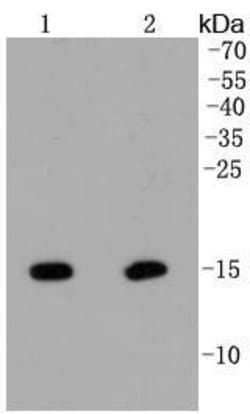
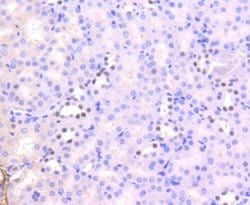
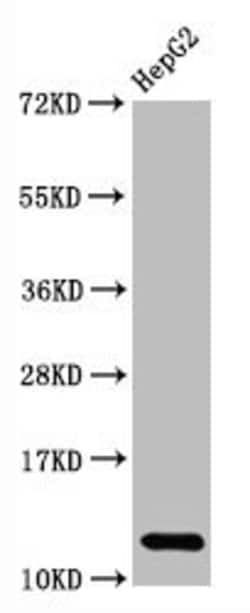
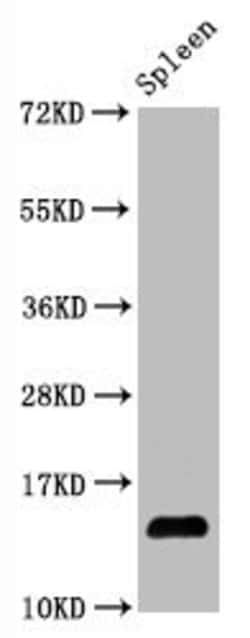
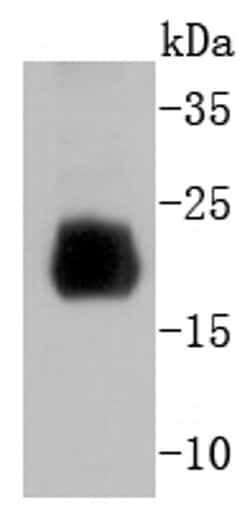
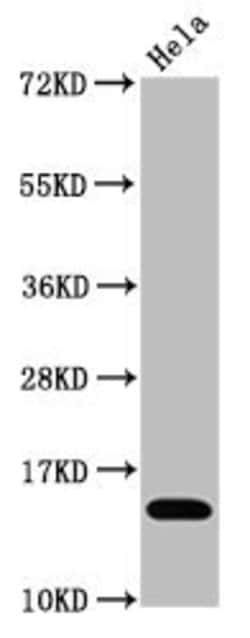
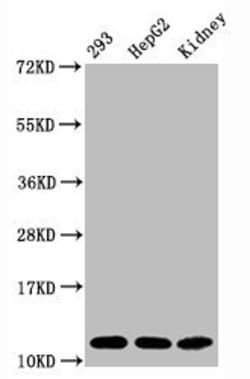
Immunocytochemistry, Immunohistochemistry, Western Blot, Western Blot
Clone
SR4-15
Conjugate
Unconjugated
Gene
H2AZ1
Gene Alias
1190022L06, Acetyl-Histone H2, Acetyl-Histone H2A K9, Acetyl-Histone H2A Lys9, AW228881, dJ160A22.4, dJ86C11.1, gammaH2ax, H2A 615, H2A GL101, H2A histone family member, H2A histone family member X, H2A histone family member Z, H2A histone family, member A, H2A histone family, member C, H2A histone family, member E, H2A histone family, member G, H2A histone family, member M, H2A histone family, member P, H2A histone family, member X, H2A histone family, member Z, H2A.1, H2A.1b, H2A.2, H2A.3, H2A.X, H2A.Z, H2A.Z-1, H2A/a, H2A/c, H2A/d, H2A/E, H2A/g, H2A/m, H2A/p, H2A/S, H2a/x, H2A/z, H2a-291A, H2a-53, H2AC11, H2ac13, H2AC15, H2AC16, H2AC17, h2ad, H2ae, H2AFA, H2AFALii, H2AFC, H2AFD, H2AFE, H2AFG, H2AFI, H2AFM, H2AFN, H2AFP, H2AFX, H2afz, H2AG, H2AH, h2ai, H2ak, H2AK5ac, H2ALys9ac, H2AX, H2AX histone, H2AZ, H2AZ histone, HIS, Hist1h2aa, Hist1h2ab, Hist1h2ac, HIST1H2AD, Hist1h2ae, HIST1H2AG, HIST1H2AH, Hist1h2ai, HIST1H2AJ, HIST1H2AK, HIST1H2AL, HIST1H2AM, Hist1h2an, Hist1h2ao, Hist1h2ap, Hist1h2ba, HIST3H2A, Hist5-2ax, histone 1, H2ab, histone 1, H2ad, histone 1, H2ae, histone 1, H2ag, histone 1, H2ah, histone 1, H2ai, histone 1, H2aj, histone 1, H2ba, histone 2, H2ai, histone 5 protein 2ax, histone cluster 1, H2aa, histone cluster 1, H2ab, histone cluster 1, H2ad, histone cluster 1, H2ae, histone cluster 1, H2ag, histone cluster 1, H2ah, histone cluster 1, H2ai, histone cluster 1, H2aj, histone cluster 1, H2ba, histone H2A type 1, Histone H2A type 1-B, Histone H2A type 1-B/E, Histone H2A type 1-C, Histone H2A type 1-D, Histone H2A type 1-E, Histone H2A type 1-G, Histone H2A type 1-H, Histone H2A type 1-I, Histone H2A type 1-J, Histone H2A type 1-N, Histone H2A type 1-O, Histone H2A type 1-P, Histone H2A type 4, histone H2A, testis, Histone H2A.2, Histone H2A.3, histone H2A.x, Histone H2A.Z, histone H2A/a, Histone H2A/e, Histone H2A/g, histone H2A/m, histone H2A/p, Histone H2A/ptl, Histone H2A/s, histone H2AD, histone H2AE, histone H2AX, Histone H2B type 1-A, histone H2B, testis, LOC680322, MGC74460, pH2A/f, RGD1566119, similar to Histone H2A type 1, testis-specific histone 2a, testis-specific histone 2b, testis-specific histone H2B, Th2a, Th2b
Host Species
Rabbit
Purification Method
Protein A
Regulatory Status
RUO
Gene ID (Entrez)
15270, 221613, 24828, 24829, 255626, 3012, 3013, 3014, 3015, 319165, 319166, 319167, 319168, 319172, 319174, 319191, 500987, 51788, 58940, 680322, 8329, 8331, 8335, 85235, 8969
Content And Storage
Store at 4°C short term. For long term storage, store at -20°C, avoiding freeze/thaw cycles.
Form
Liquid
Related Products

Description
- Recombinant rabbit monoclonal antibodies are produced using in vitro expression systems
- The expression systems are developed by cloning in the specific antibody DNA sequences from immunoreactive rabbits
- Then, individual clones are screened to select the best candidates for production
- The advantages of using recombinant rabbit monoclonal antibodies include: better specificity and sensitivity, lot-to-lot consistency, animal origin-free formulations, and broader immunoreactivity to diverse targets due to larger rabbit immune repertoire
- Histones are basic nuclear proteins that are responsible for the nucleosome structure of the chromosomal fiber in eukaryotes
- Two molecules of each of the four core histones (H2A, H2B, H3, and H4) form an octamer, around which approximately 146 bp of DNA is wrapped in repeating units, called nucleosomes
- The linker histone, H1, interacts with linker DNA between nucleosomes and functions in the compaction of chromatin into higher order structures
- This gene is intronless and encodes a member of the histone H4 family
- Transcripts from this gene lack polyA tails but instead contain a palindromic termination element
- This gene is found in the large histone gene cluster on chromosome 6.