PHD1 Recombinant Rabbit Monoclonal Antibody (SP00-48), Invitrogen™
Manufacturer: Thermo Scientific
Select a Size
| Pack Size | SKU | Availability | Price |
|---|---|---|---|
| Each of 1 | PIMA532043-Each-of-1 | In Stock | ₹ 46,413.50 |
PIMA532043 - Each of 1
In Stock
Quantity
1
Base Price: ₹ 46,413.50
GST (18%): ₹ 8,354.43
Total Price: ₹ 54,767.93
Antigen
PHD1
Classification
Monoclonal
Concentration
1 mg/mL
Formulation
TBS with 0.05% BSA, 40% Glycerol and 0.05% sodium azide, pH 7.4
Gene Accession No.
Q6AYU4, Q91YE2, Q96KS0
Gene Symbols
EGLN2
Immunogen
Recombinant protein within Human PHD1 aa 1-91
Quantity
100 μL
Primary or Secondary
Primary
Target Species
Human, Mouse, Rat
Product Type
Antibody
Isotype
IgG
Applications
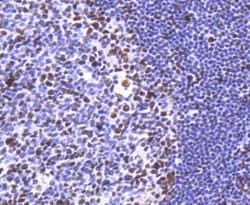
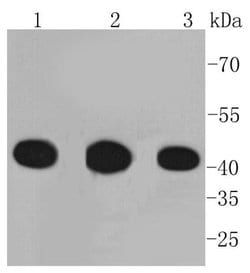
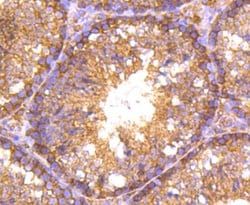
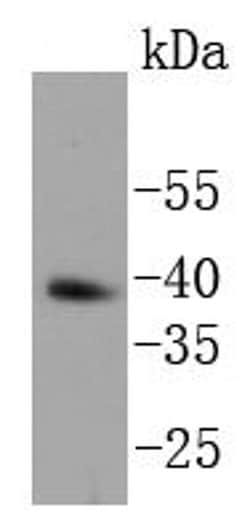
Flow Cytometry, Immunocytochemistry, Immunohistochemistry, Western Blot, Western Blot
Clone
SP00-48
Conjugate
Unconjugated
Gene
EGLN2
Gene Alias
0610011A13Rik, C85656, egl nine homolog 2, egl-9 family hypoxia inducible factor 2, egl-9 family hypoxia-inducible factor 2, Egln2, EIT6, EIT-6, Estrogen-induced tag 6, falkor, HIF-1alpha prolyl-4-hydroxylase-1, HIF-P4H 1, Hif-p4h-1, HIFPH1, HIF-PH1, HIF-prolyl hydroxylase 1, HPH-1, HPH-3, Hypoxia-inducible factor prolyl hydroxylase 1, Ier4, immediate early response 4, P4H1, Phd1, PHD-1, Prolyl hydroxylase domain-containing protein 1, SM-20
Host Species
Rabbit
Purification Method
Protein A
Regulatory Status
RUO
Gene ID (Entrez)
112398, 112406, 308457
Content And Storage
Store at 4°C short term. For long term storage, store at -20°C, avoiding freeze/thaw cycles.
Form
Liquid
Related Products
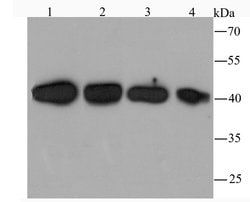
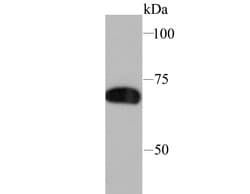
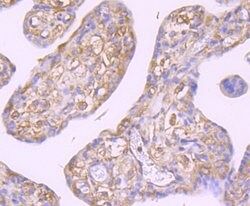
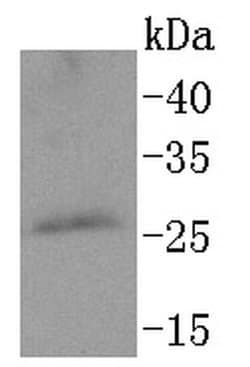
Description
- Recombinant rabbit monoclonal antibodies are produced using in vitro expression systems
- The expression systems are developed by cloning in the specific antibody DNA sequences from immunoreactive rabbits
- Then, individual clones are screened to select the best candidates for production
- The advantages of using recombinant rabbit monoclonal antibodies include: better specificity and sensitivity, lot-to-lot consistency, animal origin-free formulations, and broader immunoreactivity to diverse targets due to larger rabbit immune repertoire
- Prolyl hydroxylase domain proteins HIF PHD1, HIF PHD2 and HIF PHD3 (known as PHD1, PHD2 and PHD3 in rodents, respectively) can hydroxylate HIF-alpha subunits
- Hypoxia-inducible factor (HIF) is a transcriptional regulator important in several aspects of oxygen homeostasis
- The prolyl hydroxylases catalyze the posttranslational formation of 4-hydroxyproline in HIF-alpha proteins
- HIF PHD1, which is widely expressed, with highest levels of expression in testis, functions as a cellular oxygen sensor and is important in cell growth regulation
- HIF PHD1 can localize to the nucleus or the cytoplasm and is also detected in hormone responsive tissues, such as normal and cancerous mammary, ovarian and prostate epithelium
- HIF PHD1 is encoded by EGLN2, which maps to chromosome 19q13
- 3.