PIMA532084
Caveolin 3 Recombinant Rabbit Monoclonal Antibody (SY22-06), Invitrogen™
Manufacturer: Thermo Scientific
Select a Size
| Pack Size | SKU | Availability | Price |
|---|---|---|---|
| Each of 1 | PIMA532084-Each-of-1 | In Stock | ₹ 47,481.50 |
PIMA532084 - Each of 1
In Stock
Quantity
1
Base Price: ₹ 47,481.50
GST (18%): ₹ 8,546.67
Total Price: ₹ 56,028.17
Antigen
Caveolin 3
Classification
Monoclonal
Concentration
1 mg/mL
Formulation
TBS with 0.05% BSA, 40% Glycerol and 0.05% sodium azide, pH 7.4
Gene Accession No.
P51637, P51638, P56539
Gene Symbols
Cav3
Immunogen
Recombinant protein within Human Caveolin-3 aa 1-125
Quantity
100 μL
Primary or Secondary
Primary
Target Species
Human, Mouse, Rat
Product Type
Antibody
Isotype
IgG
Applications
Western Blot
Clone
SY22-06
Conjugate
Unconjugated
Gene
Cav3
Gene Alias
AI385751, CAV, Cav3, Cav-3, caveolin 3, caveolin-3, LGMD1C, LQT9, M-cav, M-caveolin, MGC126100, MGC126101, MGC126129, structural protein, VIP21, VIP-21
Host Species
Rabbit
Purification Method
Protein A
Regulatory Status
RUO
Gene ID (Entrez)
12391, 29161, 859
Content And Storage
Store at 4°C short term. For long term storage, store at -20°C, avoiding freeze/thaw cycles.
Form
Liquid
Related Products
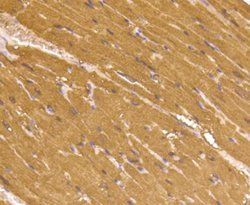
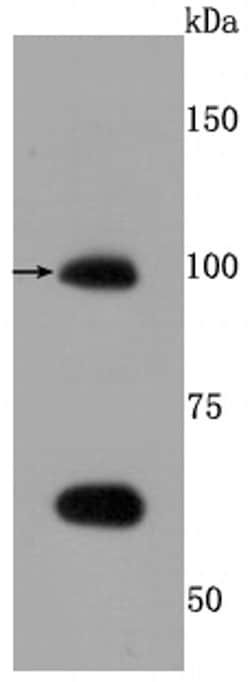
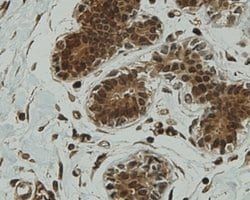
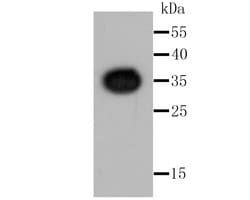
Description
- Recombinant rabbit monoclonal antibodies are produced using in vitro expression systems
- The expression systems are developed by cloning in the specific antibody DNA sequences from immunoreactive rabbits
- Then, individual clones are screened to select the best candidates for production
- The advantages of using recombinant rabbit monoclonal antibodies include: better specificity and sensitivity, lot-to-lot consistency, animal origin-free formulations, and broader immunoreactivity to diverse targets due to larger rabbit immune repertoire
- Caveolin-3 (CAV3) acts as a scaffolding protein within the caveolar membrane
- It interacts directly with G-protein alpha subunits and can functionally regulate their activity
- Caveolin-3 may also regulate voltage-gated potassium channels
- It also plays a role in the sarcolemma repair mechanism of both skeletal muscle and cardiomyocytes that permits rapid resealing of membranes disrupted by mechanical stress
- Caveolin-3 also mediates the recruitment of CAVIN2 and CAVIN3 proteins to the caveolae
- Mutations in the gene can result in HyperCKmia, rippling muscle disease 2, cardiomyopathy, long QT syndrome 9, sudden infant death syndrome, and myopathy.