BPI Recombinant Rabbit Monoclonal Antibody (SN06-63), Invitrogen™
Manufacturer: Thermo Scientific
Select a Size
| Pack Size | SKU | Availability | Price |
|---|---|---|---|
| Each of 1 | PIMA532309-Each-of-1 | In Stock | ₹ 47,481.50 |
PIMA532309 - Each of 1
In Stock
Quantity
1
Base Price: ₹ 47,481.50
GST (18%): ₹ 8,546.67
Total Price: ₹ 56,028.17
Antigen
BPI
Classification
Monoclonal
Concentration
1 mg/mL
Formulation
TBS with 0.05% BSA, 40% Glycerol and 0.05% sodium azide, pH 7.4
Gene Accession No.
P17213
Gene Symbols
BPI
Immunogen
Synthetic peptide within Human BPI aa 131-180
Quantity
100 μL
Primary or Secondary
Primary
Target Species
Human, Zebrafish
Product Type
Antibody
Isotype
IgG
Applications
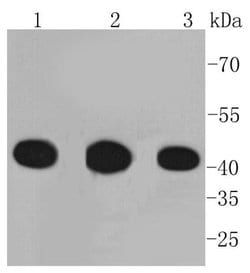
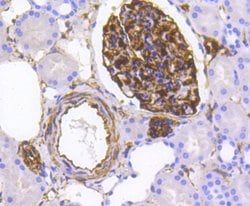
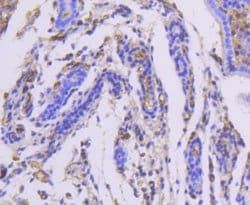
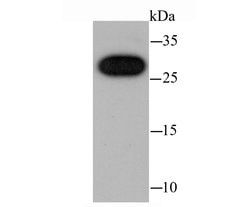
Flow Cytometry, Western Blot
Clone
SN06-63
Conjugate
Unconjugated
Gene
BPI
Gene Alias
9230105K17Rik, Bactericidal permeability-increasing protein, bactericidal permeablility increasing protein, bactericidal/permeability-increasing protein, BPI, BPI fold containing family D, member 1, BPIFD1, CAP 57, rBPI, recombinant BPI holoprotein, rBPI, RP13-218F6_A.1
Host Species
Rabbit
Purification Method
Protein A
Regulatory Status
RUO
Gene ID (Entrez)
671
Content And Storage
Store at 4°C short term. For long term storage, store at -20°C, avoiding freeze/thaw cycles.
Form
Liquid
Related Products
Description
- Recombinant rabbit monoclonal antibodies are produced using in vitro expression systems
- The expression systems are developed by cloning in the specific antibody DNA sequences from immunoreactive rabbits
- Then, individual clones are screened to select the best candidates for production
- The advantages of using recombinant rabbit monoclonal antibodies include: better specificity and sensitivity, lot-to-lot consistency, animal origin-free formulations, and broader immunoreactivity to diverse targets due to larger rabbit immune repertoire
- The antimicrobial protein BPI is a 55 kDa protein found in the primary (azurophilic) granules of human neutrophils and has also been detected on surface of neutrophils, small intestinal and oral epithelial cells
- BPI is a bactericidal compound that is present in polymorphonuclear cells (PMN) and in lower levels in the specific granules of eosinophils
- BPI possesses high affinity toward the lipid A region of lipopolysaccharides (LPS) that comprise the outer leaflet of the gram-negative bacterial outer membrane
- The binding of BPI to lipid A causes multiple anti-infective activities against gram-negative bacteria
- These include: cytotoxicity via sequential damage to bacterial outer and inner lipid membranes, neutralization of gram-negative bacterial LPS, opsonization of bacteria to enhance phagocytosis by neutrophils
- BPI may be a critical determinant in the development of LPStriggered airways disease since airway epithelial cells constitutively express the BPI gene and produce the BPI protein
- Inflammation induced by LPS possibly contributes to the development of rapid airflow decline, a serious and often fatal complication of hematopoietic cell transplantation
- Furthermore, a 21 kDa bioactive recombinant fragment of BPI, rBPI21, was shown to confer a survival advantage against invasive pneumococcal disease by binding to the gram-positive bacterial pathogen, pneumolysin.