HDAC3 Monoclonal Antibody (7A11), Invitrogen™
Manufacturer: Thermo Scientific
Select a Size
| Pack Size | SKU | Availability | Price |
|---|---|---|---|
| Each of 1 | PIMA532941-Each-of-1 | In Stock | ₹ 50,507.50 |
PIMA532941 - Each of 1
In Stock
Quantity
1
Base Price: ₹ 50,507.50
GST (18%): ₹ 9,091.35
Total Price: ₹ 59,598.85
Antigen
HDAC3
Classification
Monoclonal
Concentration
1 mg/mL
Formulation
PBS with 50% glycerol and 0.02% sodium azide, pH 7.2
Gene Accession No.
O15379, O88895, Q6P6W3
Gene Symbols
HDAC3
Immunogen
Recombinant full length Human HDAC3.
Quantity
100 μL
Primary or Secondary
Primary
Target Species
Human, Mouse, Rat
Product Type
Antibody
Isotype
IgG1
Applications
Immunocytochemistry, Western Blot
Clone
7A11
Conjugate
Unconjugated
Gene
HDAC3
Gene Alias
AW537363, HD3, Hdac3, HDAC3 splicing HDAC3alpha, HDAC3 splicing HDAC3beta, HDAC3 splicing HDAC3delta, HDAC3 splicing HDAC3gamma, histone deacetylase 3, histone deacetylase 3-like protein, RPD3, RPD3-2, SMAP45
Host Species
Mouse
Purification Method
Antigen affinity chromatography
Regulatory Status
RUO
Gene ID (Entrez)
15183, 84578, 8841
Content And Storage
Store at 4°C short term. For long term storage, store at -20°C, avoiding freeze/thaw cycles.
Form
Liquid
Related Products
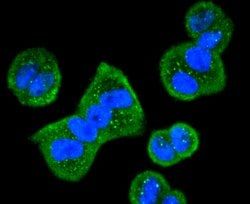
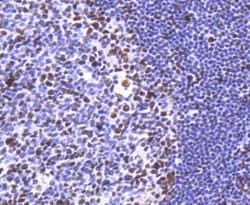
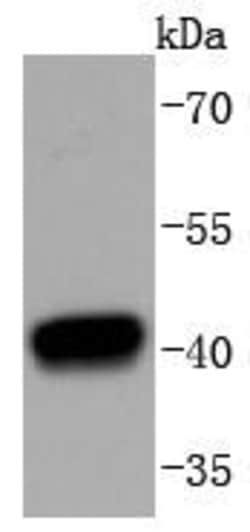
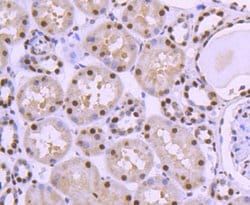
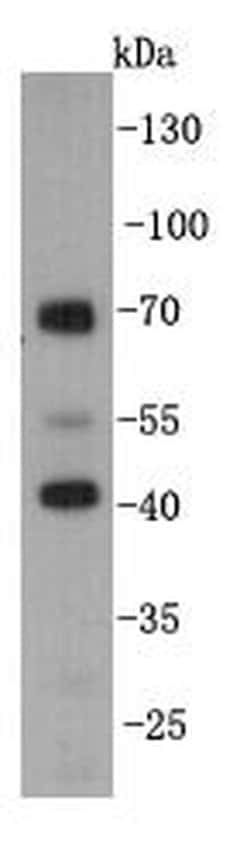
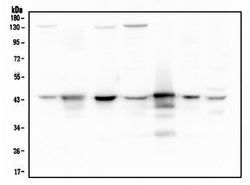
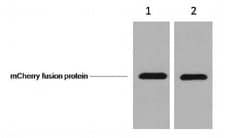
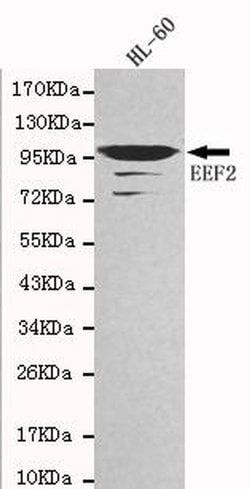
Description
- Histones play a critical role in transcriptional regulation, cell cycle progression, and developmental events
- Histone acetylation/deacetylation alters chromosome structure and affects transcription factor access to DNA
- HDAC3 belongs to the histone deacetylase/acuc/apha family
- It has histone deacetylase activity and represses transcription when tethered to a promoter
- It may participate in the regulation of transcription through its binding with the zinc-finger transcription factor YY1
- This protein can also down-regulate p53 function and thus modulate cell growth and apoptosis
- This gene is regarded as a potential tumor suppressor gene.