PIMA532994
TNN Monoclonal Antibody (BC-24), Invitrogen™
Manufacturer: Thermo Scientific
Select a Size
| Pack Size | SKU | Availability | Price |
|---|---|---|---|
| Each of 1 | PIMA532994-Each-of-1 | In Stock | ₹ 47,481.50 |
PIMA532994 - Each of 1
In Stock
Quantity
1
Base Price: ₹ 47,481.50
GST (18%): ₹ 8,546.67
Total Price: ₹ 56,028.17
Antigen
TNN
Classification
Monoclonal
Concentration
100 μg/mL
Formulation
ascites diluted in 1.2% sodium acetate with 2MG BSA and 0.01MG sodium azide
Gene Accession No.
Q9UQP3
Gene Symbols
TNN
Immunogen
Human tenascin.
Regulatory Status
RUO
Gene ID (Entrez)
63923
Content And Storage
Store at 4°C short term. For long term storage, store at -20°C, avoiding freeze/thaw cycles.
Form
Lyophilized
Applications
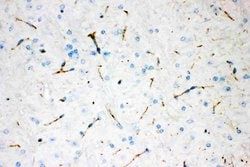
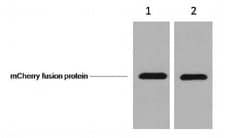
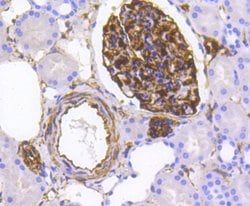
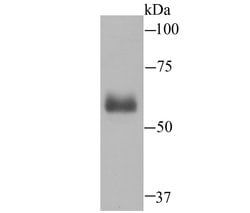
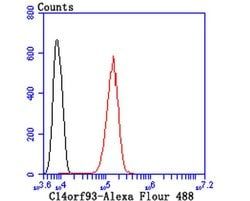
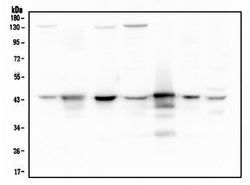
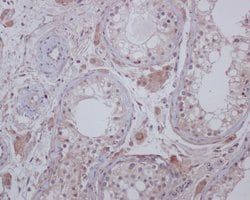
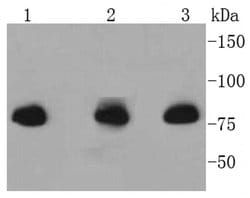
Immunocytochemistry, Immunohistochemistry (Frozen), Immunohistochemistry (Paraffin), Western Blot
Clone
BC-24
Conjugate
Unconjugated
Gene
TNN
Gene Alias
tenascin N, tenascin-N, Tenascin-W, tenasin W, TNN, TN-N, Tnw, TN-W
Host Species
Mouse
Quantity
100 μg
Primary or Secondary
Primary
Target Species
Human
Product Type
Antibody
Isotype
IgG1
Related Products
Description
- Reconstitute with 1 mL of PBS buffer to yield a concentration of 100 μg/mL
- Extracellular matrix protein that seems to be a ligand for ITGA8:ITGB1, ITGAV:ITGB1 and ITGA4:ITGB1 (PubMed:17909022)
- Involved in neurite outgrowth and cell migration in hippocampal explants
- During endochondral bone formation, inhibits proliferation and differentiation of proteoblasts mediated by canonical WNT signaling
- In tumors, stimulates angiogenesis by elongation, migration and sprouting of endothelial cells (PubMed:19884327)
- Expressed in most mammary tumors, may facilitate tumorigenesis by supporting the migratory behavior of breast cancer cells (PubMed:17909022)
- [UniProt]