GOLPH2 Recombinant Rabbit Monoclonal Antibody (9C2), Invitrogen™
Manufacturer: Thermo Scientific
Select a Size
| Pack Size | SKU | Availability | Price |
|---|---|---|---|
| Each of 1 | PIMA533143-Each-of-1 | In Stock | ₹ 50,596.50 |
PIMA533143 - Each of 1
In Stock
Quantity
1
Base Price: ₹ 50,596.50
GST (18%): ₹ 9,107.37
Total Price: ₹ 59,703.87
Antigen
GOLPH2
Classification
Recombinant Monoclonal
Concentration
1.29 mg/mL
Formulation
PBS with 50% glycerol and 0.02% sodium azide, pH 7.4
Gene Accession No.
Q8NBJ4
Gene Symbols
GOLM1
Immunogen
A synthesized peptide derived from human GOLM1
Quantity
100 μL
Primary or Secondary
Primary
Target Species
Human
Product Type
Antibody
Isotype
IgG
Applications
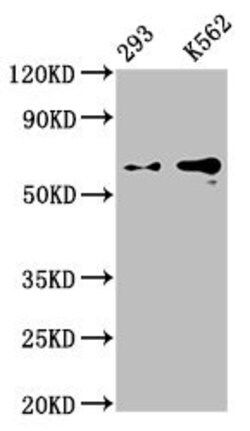
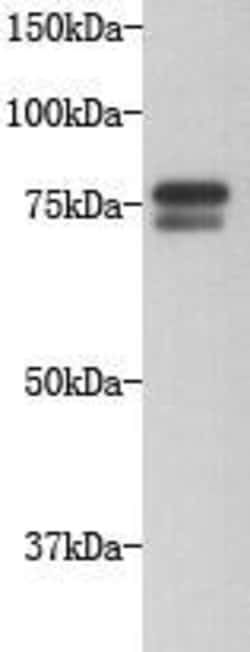
ELISA, Flow Cytometry, Western Blot
Clone
9C2
Conjugate
Unconjugated
Gene
GOLM1
Gene Alias
2310001L02Rik, AW125446, bA379P1.3, C9orf155, D030064E01Rik, epididymis luminal protein 46, FLJ22634, FLJ23608, Golgi membrane protein 1, Golgi membrane protein GP73, golgi phosphoprotein 2, golgi protein, 73-kD, GOLM1, Golph2, GOLPH2Ê, GP73, HEL46, PSEC0242, PSEC0257, RP11-379P1.3, UNQ686/PRO1326
Host Species
Rabbit
Purification Method
Protein G
Regulatory Status
RUO
Gene ID (Entrez)
51280
Content And Storage
-20°C or -80°C if preferred
Form
Liquid
Related Products

Description
- Description The Golgi complex plays a key role in the sorting and modification of proteins exported from the endoplasmic reticulum
- The protein encoded by this gene is a type II Golgi transmembrane protein
- It processes protein synthesized in the rough endoplasmic reticulum and assists in the transport of protein cargo through the Golgi apparatus
- The expression of this encoded protein has been observed to be upregulated in response to viral infection.