RHAMM Recombinant Rabbit Monoclonal Antibody (ARC0667), Invitrogen™
Manufacturer: Thermo Scientific
Select a Size
| Pack Size | SKU | Availability | Price |
|---|---|---|---|
| Each of 1 | PIMA535150-Each-of-1 | In Stock | ₹ 50,596.50 |
PIMA535150 - Each of 1
In Stock
Quantity
1
Base Price: ₹ 50,596.50
GST (18%): ₹ 9,107.37
Total Price: ₹ 59,703.87
Antigen
RHAMM
Classification
Monoclonal
Concentration
1.95 mg/mL
Formulation
PBS with 0.05% BSA, 50% glycerol and 0.02% sodium azide; pH 7.3
Gene Accession No.
O75330, Q00547
Gene Symbols
HMMR
Immunogen
A synthetic peptide corresponding to a sequence within amino acids 1-100 of human CD168/RHAMM (O75330)
Quantity
100 μL
Primary or Secondary
Primary
Target Species
Human, Mouse
Product Type
Antibody
Isotype
IgG
Applications
Immunohistochemistry (Paraffin), Western Blot
Clone
ARC0667
Conjugate
Unconjugated
Gene
HMMR
Gene Alias
AA386826; CD168; Hmmr; Hyaluronan mediated motility receptor; hyaluronan mediated motility receptor (RHAMM); hyaluronan-mediated motility receptor; hyaluronan-mediated motility receptor (RHAMM); IHABP; Intracellular hyaluronic acid-binding protein; receptor for hyaluronan-mediated motility; RHAMM
Host Species
Rabbit
Purification Method
Affinity Chromatography
Regulatory Status
RUO
Gene ID (Entrez)
15366, 3161
Content And Storage
-20° C, Avoid Freeze/Thaw Cycles
Form
Liquid
Related Products


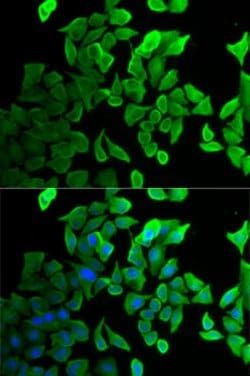
Description
- Immunogen sequence: MSFPKAPLKR FNDPSGCAPS PGAYDVKTLE VLKGPVSFQK SQRFKQQKES KQNLNVDKDT TLPASARKVK SSESKESQKN DKDLKILEKE IRVLLQERGA The protein encoded by this gene is involved in cell motility
- It is expressed in breast tissue and together with other proteins, it forms a complex with BRCA1 and BRCA2, thus is potentially associated with higher risk of breast cancer
- Alternatively spliced transcript variants encoding different isoforms have been noted for this gene.