HSP90 Monoclonal Antibody (4F3.E8), PerCP, Invitrogen™
Manufacturer: Thermo Scientific
Select a Size
| Pack Size | SKU | Availability | Price |
|---|---|---|---|
| Each of 1 | PIMA545185-Each-of-1 | In Stock | ₹ 41,207.00 |
PIMA545185 - Each of 1
In Stock
Quantity
1
Base Price: ₹ 41,207.00
GST (18%): ₹ 7,417.26
Total Price: ₹ 48,624.26
Antigen
HSP90
Classification
Monoclonal
Concentration
1 mg/mL
Formulation
2.15mM MES, 47.35mM phosphate with 1.033mM EDTA and no preservative; pH 7.4
Gene Accession No.
P07900, P07901, P08238, P11499, P34058, P82995
Gene Symbols
HSP90AA1, HSP90AB1
Immunogen
Recombinant Human HSP90 purified from E.coli
Quantity
200 μg
Primary or Secondary
Primary
Target Species
Human, Mouse, Plant, Rat
Form
Liquid
Applications
ELISA, Immunocytochemistry, Immunohistochemistry (Paraffin), Immunohistochemistry (PFA fixed), Immunoprecipitation, Western Blot
Clone
4F3.E8
Conjugate
PerCP
Gene
HSP90AB1
Gene Alias
86kDa; 89kDa; 90kDa; 90-kDa heat shock protein; 90-kDa heat shock protein alpha; 90-kDa heat shock protein beta; AL022974; AL024080; AL024147; C81438; D6S182; EL52; epididymis luminal secretory protein 52; epididymis secretory sperm binding protein Li 65p; heat shock 84 kDa; Heat shock 86 kDa; heat shock 90 kDa protein; heat shock 90kD protein 1, alpha; heat shock 90kD protein 1, alpha-like 4; heat shock 90kD protein 1, beta; heat shock 90kD protein, alpha-like 4; heat shock 90kDa protein 1, alpha; heat shock 90kDa protein 1, beta; Heat shock protein; heat shock protein 1, alpha; heat shock protein 1, beta; heat shock protein 86; heat shock protein 90 alpha (cytosolic), class B member 1; heat shock protein 90 alpha family class A member 1; heat shock protein 90 alpha family class B member 1; heat shock protein 90 beta; heat shock protein 90 kDa; heat shock protein 90, alpha (cytosolic), class A member 1; heat shock protein 90kDa alpha (cytosolic), class A member 1; heat shock protein 90kDa alpha (cytosolic), class B member 1; heat shock protein 90kDa alpha family class A member 1; heat shock protein 90kDa alpha family class B member 1; heat shock protein HSP 90-alpha; Heat shock protein HSP 90-beta; heat shock protein, 1; heat shock protein, 84 kDa 1; heat shock protein, 86 kDa 1; heat shock protein, 89 kDa; HEL-S-65p; HSP; HSP 84; HSP 86; HSP 90; hsp4; HSP84; Hsp84-1; HSP86; Hsp86-1; Hsp89; HSP89A; Hsp90; HSP90A; Hsp90aa1; Hsp90ab1; HSP90B; HSP90-BETA; HSP90N; HSPC1; HSPC2; HSPCA; HSPCA protein; HSPCAL1; HSPCAL4; HSPCB; HSPN; LAP2; LAP-2; lipopolysaccharide-associated protein 2; LPS-associated protein 2; renal carcinoma antigen NY-REN-38; retinal degeneration slow protein; TSTA; Tumor-specific transplantation 84 kDa antigen; tumor-specific transplantation 86 kDa antigen; Unknown (protein for IMAGE:7943063)
Host Species
Mouse
Purification Method
Protein G
Regulatory Status
RUO
Gene ID (Entrez)
15516, 15519, 299331, 301252, 3320, 3326
Content And Storage
4° C
Isotype
IgG2a
Related Products

Description
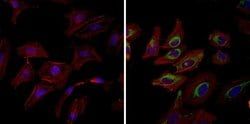
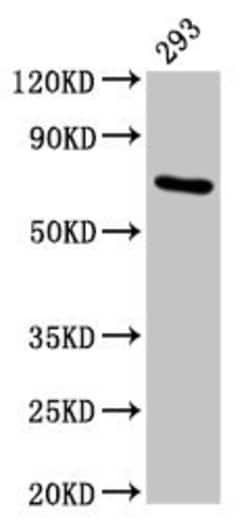
- 0.5 μg/mL of MA5-45185 was sufficient for detection of HSP90alpha in 20 μg of heat shocked HeLa cell lysate by colorimetric immunoblot analysis using Goat anti-mouse IgG:HRP as the secondary antibody.∣Detects approximately 90kDa
- This antibody detects both alpha and beta forms of HSP90 equally well
- HSP90 proteins are highly conserved molecular chaperones that have key roles in signal transduction, protein folding, protein degradation, and morphologic evolution
- HSP90 proteins normally associate with other cochaperones and play important roles in folding newly synthesized proteins or stabilizing and refolding denatured proteins after stress
- There are 2 major cytosolic HSP90 proteins, HSP90AA1, an inducible form, and HSP90AB1 and mitochondria (Chen et al., 2005 ).