RAD23A Polyclonal Antibody, Invitrogen™
Manufacturer: Thermo Scientific
Select a Size
| Pack Size | SKU | Availability | Price |
|---|---|---|---|
| Each of 1 | PIPA131798-Each-of-1 | In Stock | ₹ 49,083.50 |
PIPA131798 - Each of 1
In Stock
Quantity
1
Base Price: ₹ 49,083.50
GST (18%): ₹ 8,835.03
Total Price: ₹ 57,918.53
Antigen
RAD23A
Classification
Polyclonal
Conjugate
Unconjugated
Gene
RAD23A
Gene Alias
2310040P19Rik; AL024030; HHR23A; HR23A; MGC111083; Mhr23a; rad23; RAD23 homolog A (S. cerevisiae); RAD23 homolog A, nucleotide excision repair protein; RAD23, yeast homolog, A; RAD23A; RAD23a homolog (S. cerevisiae); UV excision repair protein RAD23 homolog A
Host Species
Goat
Purification Method
Antigen affinity chromatography
Regulatory Status
RUO
Gene ID (Entrez)
5886
Content And Storage
Store at 4°C short term. For long term storage, store at -20°C, avoiding freeze/thaw cycles.
Form
Liquid
Applications
Western Blot
Concentration
1.2 mg/mL
Formulation
0.02M potassium phosphate with 0.15M NaCl and 0.01% sodium azide; pH 7.2
Gene Accession No.
P54725
Gene Symbols
RAD23A
Immunogen
synthetic peptide KSPSEESAPTTSPEC, corresponding to amino acids 122-135 of Human hHR23A.
Quantity
50 μg
Primary or Secondary
Primary
Target Species
Human
Product Type
Antibody
Isotype
IgG
Related Products

Description
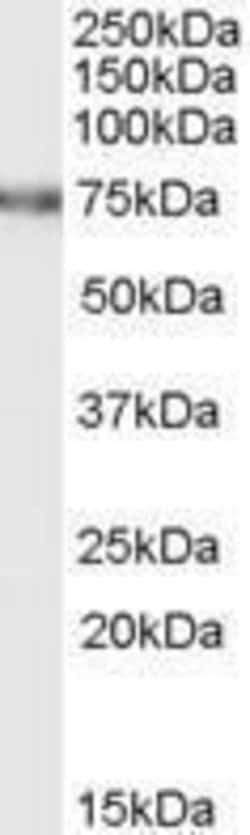
- Description PA1-31798 detects RAD23A from human samples
- The product of this gene is a small iron-sulfur protein that transfers electrons from NADPH through ferredoxin reductase to a terminal cytochrome P450
- This particular oxidation/reduction system is found in steroidogenic tissues, and is involved with the synthesis of bile acid and vitamin D
- In addition to the expressed gene at this chromosomal locus (11q22), there are pseudogenes located on chromosomes 20 and 21
- This gene product has been identified in a number of different tissues but all forms have been shown to be identical and are not tissue specific.