UBIAD1 Polyclonal Antibody, Invitrogen™
Manufacturer: Thermo Scientific
Select a Size
| Pack Size | SKU | Availability | Price |
|---|---|---|---|
| Each of 1 | PIPA146133-Each-of-1 | In Stock | ₹ 46,502.50 |
PIPA146133 - Each of 1
In Stock
Quantity
1
Base Price: ₹ 46,502.50
GST (18%): ₹ 8,370.45
Total Price: ₹ 54,872.95
Antigen
UBIAD1
Classification
Polyclonal
Conjugate
Unconjugated
Gene
UBIAD1
Gene Alias
1200002M06Rik; AI426463; AW320947; RGD1309588; RP4-796F18.1; SCCD; Tere1; transitional epithelia response protein; transitional epithelial response protein 1; UbiA prenyltransferase domain containing 1; ubiA prenyltransferase domain-containing protein 1; UBIAD1
Host Species
Rabbit
Purification Method
Antigen affinity chromatography
Regulatory Status
RUO
Gene ID (Entrez)
29914
Content And Storage
Store at 4°C short term. For long term storage, store at -20°C, avoiding freeze/thaw cycles.
Form
Liquid
Applications
Western Blot
Concentration
1 mg/mL
Formulation
PBS with 0.02% sodium azide
Gene Accession No.
Q9Y5Z9
Gene Symbols
UBIAD1
Immunogen
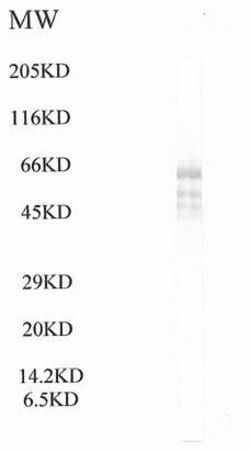
A synthetic peptide made to residues 32-45 of human TERE1
Quantity
100 μL
Primary or Secondary
Primary
Target Species
Human
Product Type
Antibody
Isotype
IgG
Related Products


Description
- The target sequence has 85% sequence homology with mouse and rat proteins
- A novel gene designated TERE1, has a significant effect on the growth regulation in bladder cancer
- The TERE1 gene maps to a chromosome locus that has been identified by loss of heterozygosity studies as a site of a putative tumor suppressor gene or genes for multiple tumor types including prostate carcinoma
- Data suggest that TERE1 may be significant in prostate cancer growth regulation and the down regulation or absence of TERE1 may be an important component of the phenotype of advanced disease
- Data also suggest a potential role for this gene product in the progression of bladder cancer.