SNAPAP Polyclonal Antibody, Invitrogen™
Manufacturer: Thermo Scientific
Select a Size
| Pack Size | SKU | Availability | Price |
|---|---|---|---|
| Each of 1 | PIPA5100078-Each-of-1 | In Stock | ₹ 46,502.50 |
PIPA5100078 - Each of 1
In Stock
Quantity
1
Base Price: ₹ 46,502.50
GST (18%): ₹ 8,370.45
Total Price: ₹ 54,872.95
Antigen
SNAPAP
Classification
Polyclonal
Conjugate
Unconjugated
Gene
SNAPIN
Gene Alias
25kDa; AA407989; AV026596; biogenesis of lysosomal organelles complex-1, subunit 7; biogenesis of lysosome-related organelles complex 1 subunit 7; BLOC-1 subunit 7; BLOC1S7; BLOS7; BORCS3; SNAP associated protein; SNAP-25-binding protein; SNAP25BP; SNAPAP; SNAP-associated protein; SNAPIN; SNARE associated protein snapin; SNARE-associated protein Snapin; synaptosomal-associated protein 25 binding protein; synaptosomal-associated protein 25-binding protein; synaptosomal-associated protein, 25 kDa, binding protein
Host Species
Rabbit
Purification Method
Affinity chromatography
Regulatory Status
RUO
Gene ID (Entrez)
20615, 23557, 295217
Content And Storage
-20°C
Form
Liquid
Applications
Immunohistochemistry (Paraffin), Western Blot
Concentration
1 mg/mL
Formulation
PBS with 50% glycerol and 0.02% sodium azide; pH 7.4
Gene Accession No.
O95295, P60192, Q9Z266
Gene Symbols
SNAPIN
Immunogen
A synthesized peptide derived from human SNAPIN(Accession O95295), corresponding to amino acid residues M1-Q38.
Quantity
100 μL
Primary or Secondary
Primary
Target Species
Human, Mouse, Rat
Product Type
Antibody
Isotype
IgG
Related Products
Description
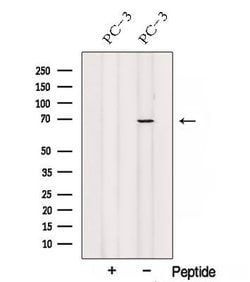
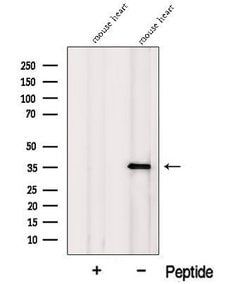
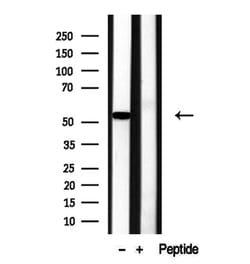
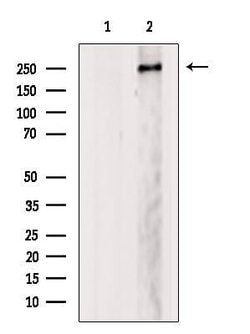
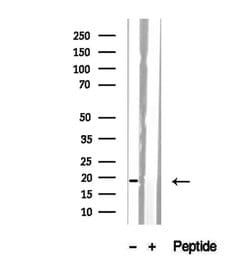
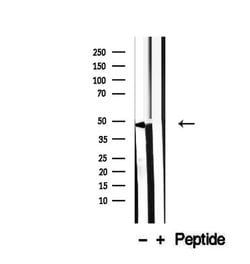
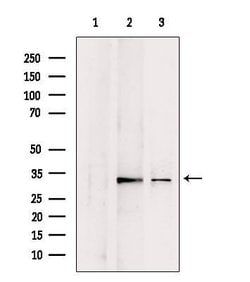
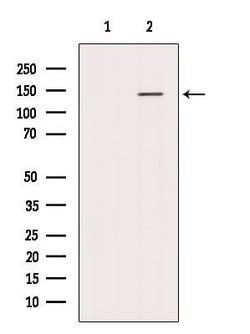
- Antibody detects endogenous levels of total SNAPIN
- The protein encoded by this gene is a coiled-coil-forming protein that associates with the SNARE (soluble N-ethylmaleimide-sensitive fusion protein attachment protein receptor) complex of proteins and the BLOC-1 (biogenesis of lysosome-related organelles) complex
- Biochemical studies have identified additional binding partners
- As part of the SNARE complex, it is required for vesicle docking and fusion and regulates neurotransmitter release
- The BLOC-1 complex is required for the biogenesis of specialized organelles such as melanosomes and platelet dense granules
- Mutations in gene products that form the BLOC-1 complex have been identified in mouse strains that are models of Hermansky-Pudlak syndrome
- Alternative splicing results in multiple transcript variants.