CMIP Polyclonal Antibody, Invitrogen™
Manufacturer: Thermo Scientific
Select a Size
| Pack Size | SKU | Availability | Price |
|---|---|---|---|
| Each of 1 | PIPA5100093-Each-of-1 | In Stock | ₹ 46,502.50 |
PIPA5100093 - Each of 1
In Stock
Quantity
1
Base Price: ₹ 46,502.50
GST (18%): ₹ 8,370.45
Total Price: ₹ 54,872.95
Antigen
CMIP
Classification
Polyclonal
Conjugate
Unconjugated
Gene
CMIP
Gene Alias
4933407C03Rik; 5830471E12Rik; AI314065; AI464126; c-Maf inducing protein; c-Maf-inducing protein; Cmip; c-Mip; Kiaa1694; RGD1306101; TCMIP; Tc-Mip; Truncated c-Maf-inducing protein
Host Species
Rabbit
Purification Method
Affinity chromatography
Regulatory Status
RUO
Gene ID (Entrez)
292051, 74440, 80790
Content And Storage
-20°C
Form
Liquid
Applications
Immunocytochemistry, Immunohistochemistry (Paraffin), Western Blot
Concentration
1 mg/mL
Formulation
PBS with 50% glycerol and 0.02% sodium azide; pH 7.4
Gene Accession No.
Q8IY22, Q9D486
Gene Symbols
CMIP
Immunogen
A synthesized peptide derived from human CMIP(Accession Q8IY22), corresponding to amino acid residues K635-L685.
Quantity
100 μL
Primary or Secondary
Primary
Target Species
Human, Mouse, Rat
Product Type
Antibody
Isotype
IgG
Related Products
Description
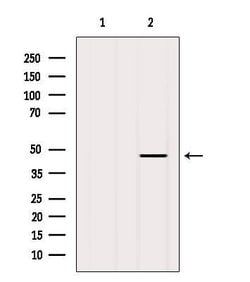
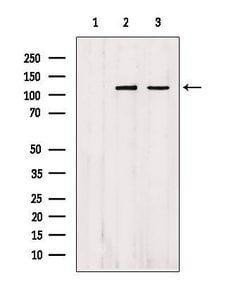
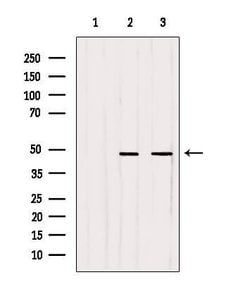
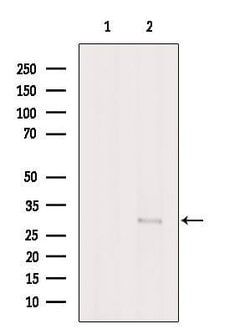
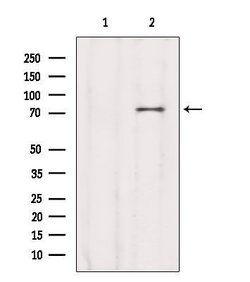
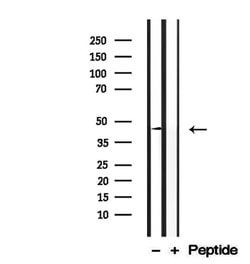
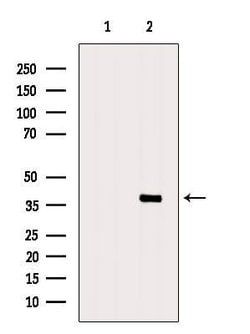
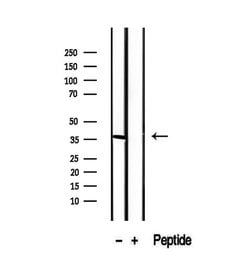
- Antibody detects endogenous levels of total CMIP
- The munc-18 interacting protein (Mint) protein family is a group of evolutionarily conserved adaptor proteins that function in membrane transport and organization
- In mammals, there exist three Mint isoforms, Mint1, 2, and 3
- Although there is little amino acid sequence conservation in the amino-terminal half, the carboxy-terminal half of these proteins is highly conserved
- Within this conserved portion there exists a phosphotyrosine-binding (PTB) and a PSD-95/DLG-A/ZO-1 (PDZ) domain, which function as protein interaction modules
- Mint1 and 2 appear to be expressed exclusively in the brain and are found to bind to Munc18, an essential component of the synaptic vesicle fusion machinery
- Mint3 is ubiquitously expressed in all tissues and is expressed at the lowest levels in the brain and testis
- Studies show that mint3 does not interact with munc-18
- Mint3 has been found to interact with the Alzheimer's Disease-related amyloid precursor protein (APP) and does so through its PTB and PDZ domains
- It has been suggested that mint3 links APP to other transport machinery components, thereby regulating it transport, endocytosis, and metabolism
- Abnormal APP metabolism has been shown to be the cause of an early-onset type of Alzheimer's disease.