HERPUD1 Polyclonal Antibody, Invitrogen™
Manufacturer: Thermo Scientific
Select a Size
| Pack Size | SKU | Availability | Price |
|---|---|---|---|
| Each of 1 | PIPA5100098-Each-of-1 | In Stock | ₹ 46,502.50 |
PIPA5100098 - Each of 1
In Stock
Quantity
1
Base Price: ₹ 46,502.50
GST (18%): ₹ 8,370.45
Total Price: ₹ 54,872.95
Antigen
HERPUD1
Classification
Polyclonal
Conjugate
Unconjugated
Gene
HERPUD1
Gene Alias
Herp; HERPUD1; homocysteine inducible ER protein with ubiquitin like domain 1; homocysteine-inducible endoplasmic reticulum stress-inducible ubiquitin-like domain member 1 protein; homocysteine-inducible, endoplasmic reticulum stress-inducible, ubiquitin-like domain member 1; homocysteine-responsive endoplasmic reticulum-resident ubiquitin-like domain member 1 protein; KIAA0025; Methyl methanesulfonate (MMF)-inducible fragment protein 1; Mif1; Mifl; MMS-inducible; Sup
Host Species
Rabbit
Purification Method
Affinity chromatography
Regulatory Status
RUO
Gene ID (Entrez)
9709
Content And Storage
-20°C
Form
Liquid
Applications
Immunohistochemistry (Paraffin), Western Blot
Concentration
1 mg/mL
Formulation
PBS with 50% glycerol and 0.02% sodium azide; pH 7.4
Gene Accession No.
Q15011
Gene Symbols
HERPUD1
Immunogen
A synthesized peptide derived from human HERPUD1(Accession Q15011), corresponding to amino acid residues M1-P46.
Quantity
100 μL
Primary or Secondary
Primary
Target Species
Human
Product Type
Antibody
Isotype
IgG
Related Products
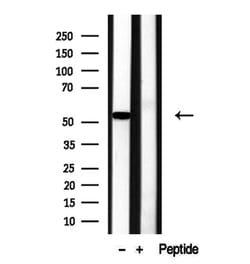
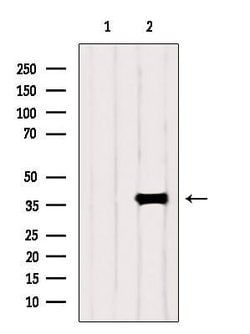
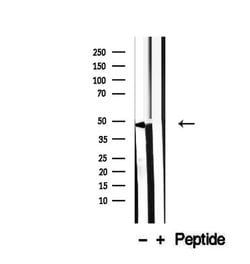
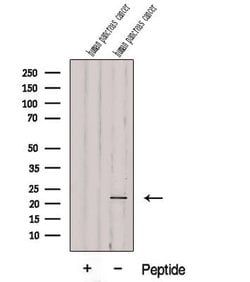
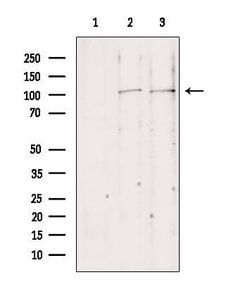
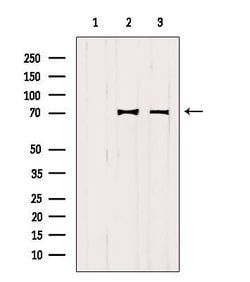
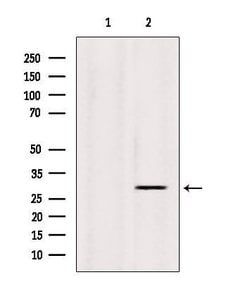
Description
- Antibody detects endogenous levels of total HERP
- The accumulation of unfolded proteins in the endoplasmic reticulum (ER) triggers the ER stress response
- This response includes the inhibition of translation to prevent further accumulation of unfolded proteins, the increased expression of proteins involved in polypeptide folding, known as the unfolded protein response (UPR), and the destruction of misfolded proteins by the ER-associated protein degradation (ERAD) system
- This gene may play a role in both UPR and ERAD
- Its expression is induced by UPR and it has an ER stress response element in its promoter region while the encoded protein has an N-terminal ubiquitin-like domain which may interact with the ERAD system
- This protein has been shown to interact with presenilin proteins and to increase the level of amyloid-beta protein following its overexpression
- Alternative splicing of this gene produces multiple transcript variants, some encoding different isoforms
- The full-length nature of all transcript variants has not been determined.