RMI1 Polyclonal Antibody, Invitrogen™
Manufacturer: Thermo Scientific
Select a Size
| Pack Size | SKU | Availability | Price |
|---|---|---|---|
| Each of 1 | PIPA5100320-Each-of-1 | In Stock | ₹ 46,502.50 |
PIPA5100320 - Each of 1
In Stock
Quantity
1
Base Price: ₹ 46,502.50
GST (18%): ₹ 8,370.45
Total Price: ₹ 54,872.95
Antigen
RMI1
Classification
Polyclonal
Conjugate
Unconjugated
Gene
RMI1
Gene Alias
4932432N11Rik; BLAP75; BLM-associated polypeptide, 75 kDa; BLM-associated protein 75 kDa; BLM-associated protein of 75 kDa; C79893; C9orf76; FAAP75; FLJ12888; homolog of yeast RecQ-mediated genome instability 1 (RMI1); RecQ mediated genome instability 1; recQ-mediated genome instability protein 1; recQ-mediated genome instability protein-like protein; RGD1310671; RMI1; RMI1, RecQ mediated genome instability 1, homolog; RMI1, RecQ mediated genome instability 1, homolog (S. cerevisiae); RP11-346I8.1
Host Species
Rabbit
Purification Method
Affinity chromatography
Regulatory Status
RUO
Gene ID (Entrez)
80010
Content And Storage
-20°C
Form
Liquid
Applications
Western Blot
Concentration
1 mg/mL
Formulation
PBS with 50% glycerol and 0.02% sodium azide; pH 7.4
Gene Accession No.
Q9H9A7
Gene Symbols
RMI1
Immunogen
A synthesized peptide derived from human RMI1(Accession Q9H9A7), corresponding to amino acid residues S437-Y487.
Quantity
100 μL
Primary or Secondary
Primary
Target Species
Human
Product Type
Antibody
Isotype
IgG
Related Products
Description
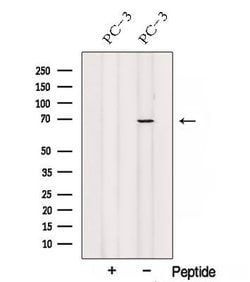
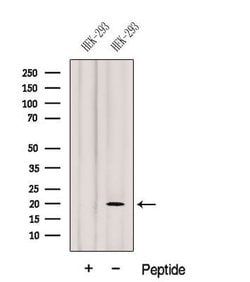
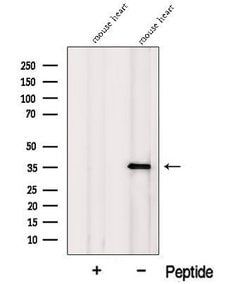
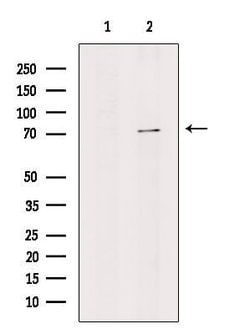
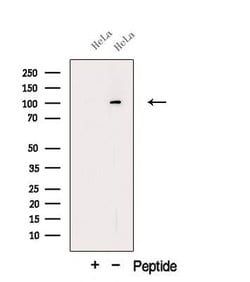
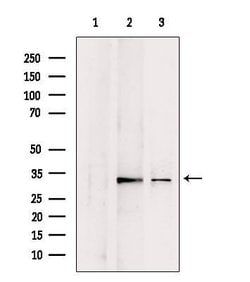
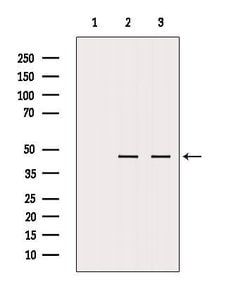
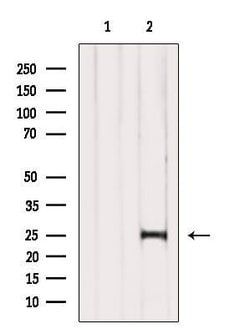
- Antibody detects endogenous levels of total RMI1
- Protein kinases are enzymes that transfer a phosphate group from a phosphate donor, generally the g phosphate of ATP, onto an acceptor amino acid in a substrate protein
- By this basic mechanism, protein kinases mediate most of the signal transduction in eukaryotic cells, regulating cellular metabolism, transcription, cell cycle progression, cytoskeletal rearrangement and cell movement, apoptosis, and differentiation
- With more than 500 gene products, the protein kinase family is one of the largest families of proteins in eukaryotes
- The family has been classified in 8 major groups based on sequence comparison of their tyrosine (PTK) or serine/threonine (STK) kinase catalytic domains
- The STE group (homologs of yeast Sterile 7, 11, 20 kinases) consists of 50 kinases related to the mitogen-activated protein kinase (MAPK) cascade families (Ste7/MAP2K, Ste11/MAP3K, and Ste20/MAP4K)
- MAP kinase cascades, consisting of a MAPK and one or more upstream regulatory kinases (MAPKKs) have been best characterized in the yeast pheromone response pathway
- Pheromones bind to Ste cell surface receptors and activate yeast MAPK pathway.