CCR9 Polyclonal Antibody, Invitrogen™
Manufacturer: Thermo Scientific
Select a Size
| Pack Size | SKU | Availability | Price |
|---|---|---|---|
| Each of 1 | PIPA5101000-Each-of-1 | In Stock | ₹ 46,502.50 |
PIPA5101000 - Each of 1
In Stock
Quantity
1
Base Price: ₹ 46,502.50
GST (18%): ₹ 8,370.45
Total Price: ₹ 54,872.95
Antigen
CCR9
Classification
Polyclonal
Conjugate
Unconjugated
Gene
Ccr9
Gene Alias
A130091K22Rik; C-C chemokine receptor type 9; C-C CKR-9; C-C motif chemokine receptor 9; CC-CKR-9; Ccr9; CCR-9; CDw199; CDw199 antigen; chemokine (C-C motif) receptor 9; chemokine C-C receptor 10; Cmkbr10; G protein-coupled receptor 28; GPR28; GPR-9-6; G-protein coupled receptor 28
Host Species
Rabbit
Purification Method
Affinity chromatography
Regulatory Status
RUO
Gene ID (Entrez)
10803, 12769, 282832
Content And Storage
-20°C
Form
Liquid
Applications
Immunocytochemistry, Western Blot
Concentration
1 mg/mL
Formulation
PBS with 50% glycerol and 0.02% sodium azide; pH 7.4
Gene Accession No.
P51686, Q9WUT7
Gene Symbols
Ccr9
Immunogen
A synthesized peptide derived from human CCR9(Accession P51686), corresponding to amino acid residues T331-L369.
Quantity
100 μL
Primary or Secondary
Primary
Target Species
Human, Mouse, Rat
Product Type
Antibody
Isotype
IgG
Related Products
Description
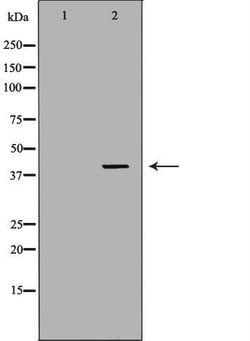
- Antibody detects endogenous levels of total CCR9
- The protein encoded by this gene is a member of the beta chemokine receptor family
- It is predicted to be a seven transmembrane protein similar to G protein-coupled receptors
- Chemokines and their receptors are key regulators of the thymocytes migration and maturation in normal and inflammation conditions
- The specific ligand of this receptor is CCL25
- It has been found that this gene is differentially expressed by T lymphocytes of small intestine and colon, suggested a role in the thymocytes recruitment and development that may permit functional specialization of immune responses in different segment of the gastrointestinal tract
- This gene is mapped to the chemokine receptor gene cluster region
- Two alternatively spliced transcript variants have been described.