ARPP21 Polyclonal Antibody, Invitrogen™
Manufacturer: Thermo Scientific
Select a Size
| Pack Size | SKU | Availability | Price |
|---|---|---|---|
| Each of 1 | PIPA5101481-Each-of-1 | In Stock | ₹ 45,345.50 |
PIPA5101481 - Each of 1
In Stock
Quantity
1
Base Price: ₹ 45,345.50
GST (18%): ₹ 8,162.19
Total Price: ₹ 53,507.69
Antigen
ARPP21
Classification
Polyclonal
Conjugate
Unconjugated
Gene
ARPP21
Gene Alias
0710001E13Rik; AI853636; ARPP21; Arpp-21; cAMP regulated phosphoprotein 21; cAMP regulated phosphoprotein 21kDa; cAMP-regulated phosphoprotein (21 kDa); cAMP-regulated phosphoprotein 21; cyclic AMP-regulated phosphoprotein 21; cyclic AMP-regulated phosphoprotein, 21; cyclic AMP-regulated phosphoprotein, 21 kD; D9Bwg1012e; Ppp1r1c; Ppp1r1cl; protein phosphatase 1, regulatory (inhibitory subunit 1C); protein phosphatase 1, regulatory (inhibitory) subunit 1C; protein phosphatase 1, regulatory subunit 1C; R3H domain containing 3; R3HDM3; RCS; Regulator of calmodulin signaling; RGD1307208; RGD1307215; TARPP; thymocyte ARPP; thymocyte cAMP-regulated phosphoprotein
Host Species
Rabbit
Purification Method
Affinity chromatography
Regulatory Status
RUO
Gene ID (Entrez)
10777, 363153, 74100
Content And Storage
-20°C
Form
Liquid
Applications
Immunocytochemistry, Immunohistochemistry (Paraffin), Western Blot
Concentration
1 mg/mL
Formulation
PBS with 50% glycerol and 0.02% sodium azide; pH 7.4
Gene Accession No.
Q9DCB4, Q9UBL0
Gene Symbols
ARPP21
Immunogen
A synthesized peptide derived from human ARPP21(Accession Q9UBL0), corresponding to amino acid residues S218-R268.
Quantity
100 μL
Primary or Secondary
Primary
Target Species
Human, Mouse, Rat
Product Type
Antibody
Isotype
IgG
Related Products
Description
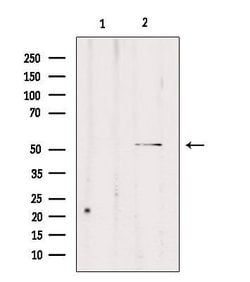
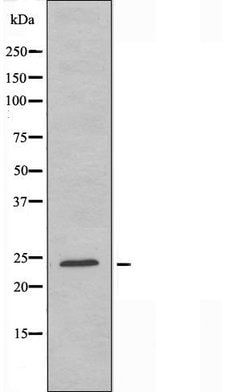
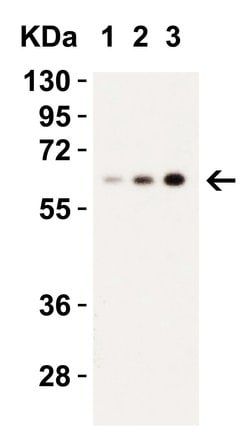
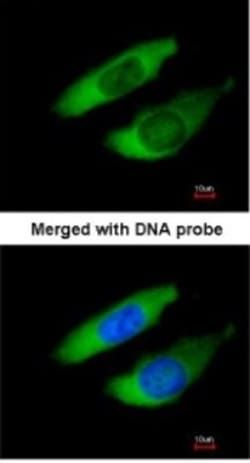
- Antibody detects endogenous levels of total ARPP21
- The autosomal dominant cerebellar ataxias (ADCA) are a heterogeneous group of neurodegenerative disorders characterized by progressive degeneration of the cerebellum, brain stem and spinal cord
- Clinically, ADCA has been divided into three groups: ADCA types I-III
- ADCAI is genetically heterogeneous, with five genetic loci, designated spinocerebellar ataxia (SCA) 1, 2, 3, 4 and 6, being assigned to five different chromosomes
- ADCAII, which always presents with retinal degeneration (SCA7), and ADCAIII often referred to as the `pure' cerebellar syndrome (SCA5), are most likely homogeneous disorders
- Several SCA genes have been cloned and shown to contain CAG repeats in their coding regions
- ADCA is caused by the expansion of the CAG repeats, producing an elongated polyglutamine tract in the corresponding protein
- The expanded repeats are variable in size and unstable, usually increasing in size when transmitted to successive generations
- The function of the ataxins is not known
- This locus has been mapped to chromosome 6, and it has been determined that the diseased allele contains 41-81 CAG repeats, compared to 6-39 in the normal allele, and is associated with spinocerebellar ataxia type 1 (SCA1)
- At least two transcript variants encoding the same protein have been found for this gene.