Aldolase B Polyclonal Antibody, Invitrogen™
Manufacturer: Thermo Scientific
Select a Size
| Pack Size | SKU | Availability | Price |
|---|---|---|---|
| Each of 1 | PIPA5101592-Each-of-1 | In Stock | ₹ 46,502.50 |
PIPA5101592 - Each of 1
In Stock
Quantity
1
Base Price: ₹ 46,502.50
GST (18%): ₹ 8,370.45
Total Price: ₹ 54,872.95
Antigen
Aldolase B
Classification
Polyclonal
Conjugate
Unconjugated
Gene
Aldob
Gene Alias
ALDB; Aldo2; Aldo-2; ALDOB; Aldolase 2; aldolase 2, B isoform; Aldolase B fructose-biphosphate; Aldolase B, fructose-biphosphate; aldolase B, fructose-bisphosphatase; aldolase B, fructose-bisphosphate; aldolase, fructose-bisphosphate B; BC016435; Fructose-bisphosphate aldolase B; LIV10; Liver-type aldolase
Host Species
Rabbit
Purification Method
Affinity chromatography
Regulatory Status
RUO
Gene ID (Entrez)
229, 230163, 24190
Content And Storage
-20°C
Form
Liquid
Applications
Immunocytochemistry, Immunohistochemistry (Paraffin), Western Blot
Concentration
1 mg/mL
Formulation
PBS with 50% glycerol and 0.02% sodium azide; pH 7.4
Gene Accession No.
P00884, P05062, Q91Y97
Gene Symbols
Aldob
Immunogen
A synthesized peptide derived from human ALDOB(Accession P05062), corresponding to amino acid residues N320-Y364.
Quantity
100 μL
Primary or Secondary
Primary
Target Species
Human, Mouse, Rat
Product Type
Antibody
Isotype
IgG
Related Products

Description
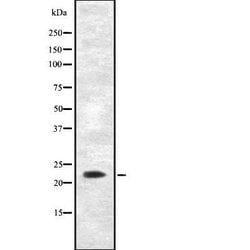
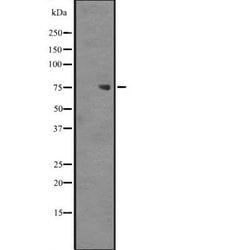
- Antibody detects endogenous levels of total ALDOB
- Fructose-1,6-bisphosphate aldolase is a tetrameric glycolytic enzyme that catalyzes the reversible conversion of fructose-1,6-bisphosphate to glyceraldehyde 3-phosphate and dihydroxyacetone phosphate
- Vertebrates have 3 aldolase isozymes which are distinguished by their electrophoretic and catalytic properties
- Differences indicate that aldolases A, B, and C are distinct proteins, the products of a family of related 'housekeeping' genes exhibiting developmentally regulated expression of the different isozymes
- The developing embryo produces aldolase A, which is produced in even greater amounts in adult muscle where it can be as much as 5% of total cellular protein
- In adult liver, kidney and intestine, aldolase A expression is repressed and aldolase B is produced
- In brain and other nervous tissue, aldolase A and C are expressed about equally
- There is a high degree of homology between aldolase A and C
- Defects in ALDOB cause hereditary fructose intolerance.