ACP5 Polyclonal Antibody, Invitrogen™
Manufacturer: Thermo Scientific
Select a Size
| Pack Size | SKU | Availability | Price |
|---|---|---|---|
| Each of 1 | PIPA5106914-Each-of-1 | In Stock | ₹ 46,502.50 |
PIPA5106914 - Each of 1
In Stock
Quantity
1
Base Price: ₹ 46,502.50
GST (18%): ₹ 8,370.45
Total Price: ₹ 54,872.95
Antigen
ACP5
Classification
Polyclonal
Conjugate
Unconjugated
Gene
ACP5
Gene Alias
acid phosphatase 5, tartrate resistant; acid phosphatase type V; Acp5; HPAP; human purple acid phosphatase; T5ap; Tartrate-resistant acid ATPase; tartrate-resistant acid phosphatase 5a; tartrate-resistant acid phosphatase 5b; tartrate-resistant acid phosphatase type 5; TRACP; TRACP5a; TRACP5b; TRAP; TR-AP; TRAPase; TrATPase; TTRRAP; Type 5 acid phosphatase
Host Species
Rabbit
Purification Method
Affinity chromatography
Regulatory Status
RUO
Gene ID (Entrez)
11433, 25732, 54
Content And Storage
-20°C
Form
Liquid
Applications
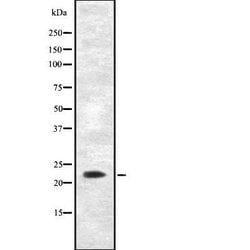
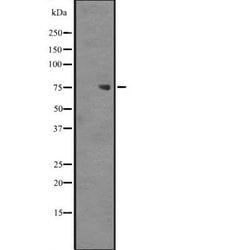
Immunohistochemistry (Paraffin), Western Blot
Concentration
1 mg/mL
Formulation
PBS with 50% glycerol and 0.02% sodium azide; pH 7.4
Gene Accession No.
P13686, P29288, Q05117
Gene Symbols
ACP5
Immunogen
A synthesized peptide derived from human ACP5(Accession P13686), corresponding to amino acid residues A12-G62.
Quantity
100 μL
Primary or Secondary
Primary
Target Species
Human, Mouse, Rat
Product Type
Antibody
Isotype
IgG
Related Products





Description
- Antibody detects endogenous levels of total ACP5
- Tartrate-resistant acid phosphatase (TRAP) is a basic iron-binding protein with high activity towards phosphoproteins, ATP and 4-nitrophenyl phosphatase
- It is detected in human alveolar macrophages, osteoclasts, spleen and liver
- Its expression is increased in spleen and monocytes of patients with Gaucher's disease; spleenocytes and circulating leukocytes of patients with hairy cell leukemia; spleen of patients with Hodgkin's lymphoma and in the sera of patients undergoing active bone turnover.