RGS1 Polyclonal Antibody, Invitrogen™
Manufacturer: Thermo Scientific
Select a Size
| Pack Size | SKU | Availability | Price |
|---|---|---|---|
| Each of 1 | PIPA5101833-Each-of-1 | In Stock | ₹ 46,502.50 |
PIPA5101833 - Each of 1
In Stock
Quantity
1
Base Price: ₹ 46,502.50
GST (18%): ₹ 8,370.45
Total Price: ₹ 54,872.95
Antigen
RGS1
Classification
Polyclonal
Conjugate
Unconjugated
Gene
RGS1
Gene Alias
1R20; B-cell activation protein BL34; BL34; Early response protein 1R20; epididymis secretory protein Li 87; HEL-S-87; IER1; immediate-early response 1, B-cell specific; IR20; Regulator of G-protein signaling 1; regulator of G-protein signalling 1; RGS1
Host Species
Rabbit
Purification Method
Affinity chromatography
Regulatory Status
RUO
Gene ID (Entrez)
50778, 54289, 5996
Content And Storage
-20°C
Form
Liquid
Applications
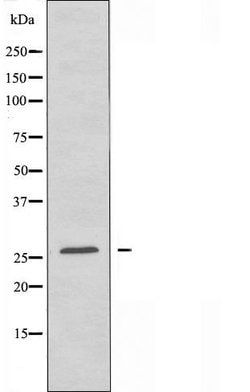
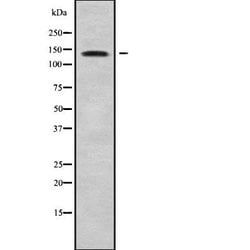
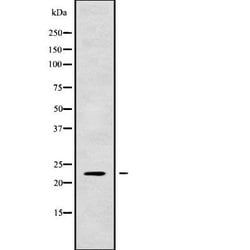
Immunohistochemistry (Paraffin), Western Blot
Concentration
1 mg/mL
Formulation
PBS with 50% glycerol and 0.02% sodium azide; pH 7.4
Gene Accession No.
P97844, Q08116, Q9JL25
Gene Symbols
RGS1
Immunogen
A synthesized peptide derived from human RGS1(Accession Q08116), corresponding to amino acid residues P130-T180.
Quantity
100 μL
Primary or Secondary
Primary
Target Species
Human, Mouse, Rat
Product Type
Antibody
Isotype
IgG
Related Products





Description
- Antibody detects endogenous levels of total RGS1
- This gene encodes a member of the regulator of G-protein signaling family
- This protein is located on the cytosolic side of the plasma membrane and contains a conserved, 120 amino acid motif called the RGS domain
- The protein attenuates the signaling activity of G-proteins by binding to activated, GTP-bound G alpha subunits and acting as a GTPase activating protein (GAP), increasing the rate of conversion of the GTP to GDP
- This hydrolysis allows the G alpha subunits to bind G beta/gamma subunit heterodimers, forming inactive G-protein heterotrimers, thereby terminating the signal.