RGS5 Polyclonal Antibody, Invitrogen™
Manufacturer: Thermo Scientific
Select a Size
| Pack Size | SKU | Availability | Price |
|---|---|---|---|
| Each of 1 | PIPA5101835-Each-of-1 | In Stock | ₹ 45,968.50 |
PIPA5101835 - Each of 1
In Stock
Quantity
1
Base Price: ₹ 45,968.50
GST (18%): ₹ 8,274.33
Total Price: ₹ 54,242.83
Antigen
RGS5
Classification
Polyclonal
Conjugate
Unconjugated
Gene
RGS5
Gene Alias
1110070A02Rik; MST092; MST106; MST129; MSTP032; MSTP092; MSTP106; MSTP129; regulator of G protein signaling 5; regulator of G-protein signaling 5; regulator of G-protein signalling 5; RGS5; RGS-5; RP11-430G6.2
Host Species
Rabbit
Purification Method
Affinity chromatography
Regulatory Status
RUO
Gene ID (Entrez)
19737, 54294, 8490
Content And Storage
-20°C
Form
Liquid
Applications
Immunocytochemistry, Immunohistochemistry (Paraffin), Western Blot
Concentration
1 mg/mL
Formulation
PBS with 50% glycerol and 0.02% sodium azide; pH 7.4
Gene Accession No.
O08850, O15539, P49800
Gene Symbols
RGS5
Immunogen
A synthesized peptide derived from human RGS5(Accession O15539), corresponding to amino acid residues I21-N71.
Quantity
100 μL
Primary or Secondary
Primary
Target Species
Human, Mouse, Rat
Product Type
Antibody
Isotype
IgG
Related Products





Description
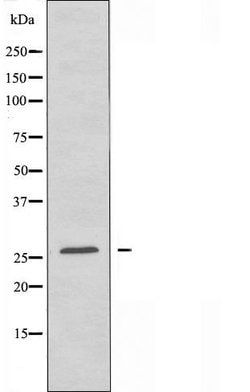
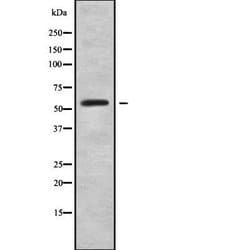
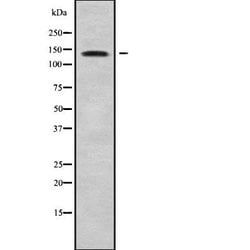
- Antibody detects endogenous levels of total RGS5
- The regulator of G protein signaling (RGS) proteins are signal transduction molecules that have structural homology to SST2 of Saccharomyces cerevisiae and EGL-10 of Caenorhabditis elegans
- Multiple genes homologous to SST2 are present in higher eukaryotes
- RGS proteins are involved in the regulation of heterotrimeric G proteins by acting as GTPase activators
- The mRNA of the human gene is abundantly expressed in heart, lung, skeletal muscle, and small intestine, and at low levels in brain, placenta, liver, colon, and leukocytes.