PIPA5101915
STMN4 Polyclonal Antibody, Invitrogen™
Manufacturer: Thermo Scientific
Select a Size
| Pack Size | SKU | Availability | Price |
|---|---|---|---|
| Each of 1 | PIPA5101915-Each-of-1 | In Stock | ₹ 46,502.50 |
PIPA5101915 - Each of 1
In Stock
Quantity
1
Base Price: ₹ 46,502.50
GST (18%): ₹ 8,370.45
Total Price: ₹ 54,872.95
Antigen
STMN4
Classification
Polyclonal
Conjugate
Unconjugated
Gene
STMN4
Gene Alias
Lagl; R75359; Rb3; stathmin 4; stathmin-4; stathmin-like 4; stathmin-like protein B3; stathmin-like protein RB3; stathmin-like-protein RB3; Stmn4
Host Species
Rabbit
Purification Method
Affinity chromatography
Regulatory Status
RUO
Gene ID (Entrez)
56471, 79423, 81551
Content And Storage
-20°C
Form
Liquid
Applications
Immunocytochemistry, Western Blot
Concentration
1 mg/mL
Formulation
PBS with 50% glycerol and 0.02% sodium azide; pH 7.4
Gene Accession No.
P63042, P63043, Q9H169
Gene Symbols
STMN4
Immunogen
A synthesized peptide derived from human STMN4(Accession Q9H169), corresponding to amino acid residues M50-A100.
Quantity
100 μL
Primary or Secondary
Primary
Target Species
Human, Mouse, Rat
Product Type
Antibody
Isotype
IgG
Related Products




Description
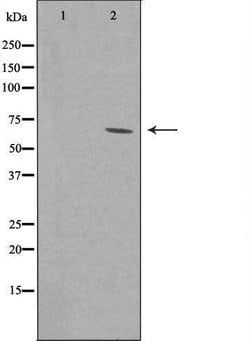
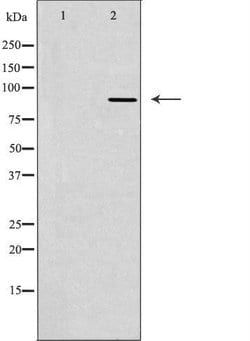
- Antibody detects endogenous levels of total STMN4
- RB3 (Stathmin-4), encoded by STMN4 gene, is a neuron-specific homologue of the SCG10/stathmin family proteins, possessing a unique N-terminal membrane-associated domain and the stathmin-like domain at the C terminus, which promotes microtubule (MT) catastrophe and/or tubulin sequestering
- Stathmin is a ubiquitous cytosolic phosphoprotein, preferentially expressed in the nervous system, and described as a relay integrating diverse intracellular signaling pathways
- RB3 is consistently up-regulated in differentiated neuroblastoma cells, and stable expression of transfected RB3 could induce differentiation, suggesting a role of RB3 during neuroblastoma differentiation
- Moreover, increased RB3 is a unique response protein in the stathmin-related proteins following optical nerve axotomy and RB3 may be a critical target for neurodegenerative diseases.