STOML2 Polyclonal Antibody, Invitrogen™
Manufacturer: Thermo Scientific
Select a Size
| Pack Size | SKU | Availability | Price |
|---|---|---|---|
| Each of 1 | PIPA599965-Each-of-1 | In Stock | ₹ 46,502.50 |
PIPA599965 - Each of 1
In Stock
Quantity
1
Base Price: ₹ 46,502.50
GST (18%): ₹ 8,370.45
Total Price: ₹ 54,872.95
Antigen
STOML2
Classification
Polyclonal
Conjugate
Unconjugated
Gene
Stoml2
Gene Alias
0610038F01Rik; EPB72-like 2; EPB72-like protein 2; HSPC108; MSLP2; Paraprotein target 7; paratarg-7; Slp2; SLP-2; stomatin (Epb7.2)-like 2; stomatin (EPB72)-like 2; stomatin like 2; stomatin-like 2; stomatin-like protein 2, mitochondrial; Stoml2
Host Species
Rabbit
Purification Method
Affinity chromatography
Regulatory Status
RUO
Gene ID (Entrez)
298203, 30968, 66592
Content And Storage
-20°C
Form
Liquid
Applications
Immunohistochemistry (Paraffin), Western Blot
Concentration
1 mg/mL
Formulation
PBS with 50% glycerol and 0.02% sodium azide; pH 7.4
Gene Accession No.
Q4FZT0, Q99JB2, Q9UJZ1
Gene Symbols
Stoml2
Immunogen
A synthesized peptide derived from human STOML2(Accession Q9UJZ1), corresponding to amino acid residues E176-I226.
Quantity
100 μL
Primary or Secondary
Primary
Target Species
Human, Mouse, Rat
Product Type
Antibody
Isotype
IgG
Related Products




Description
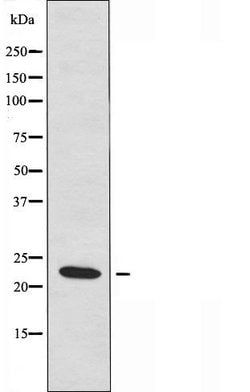
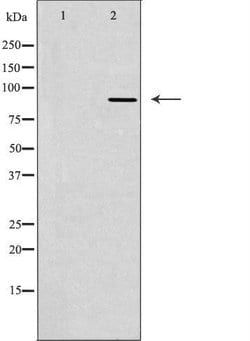
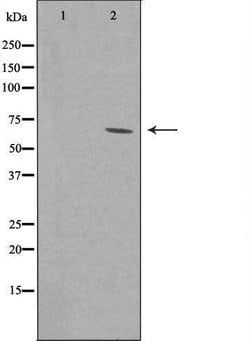
- Antibody detects endogenous levels of total STOML2
- Mitochondrial protein that probably regulates the biogenesis and the activity of mitochondria
- Stimulates cardiolipin biosynthesis, binds cardiolipin-enriched membranes where it recruits and stabilizes some proteins including prohibitin and may therefore act in the organization of functional microdomains in mitochondrial membranes
- Through regulation of the mitochondrial function may play a role into several biological processes including cell migration, cell proliferation, T-cell activation, calcium homeostasis and cellular response to stress
- May play a role in calcium homeostasis through negative regulation of calcium efflux from mitochondria
- Required for mitochondrial hyperfusion a pro-survival cellular response to stress which results in increased ATP production by mitochondria
- May also regulate the organization of functional domains at the plasma membrane and play a role in T-cell activation through association with the T-cell receptor signaling complex and its regulation.