PIPA5102207
OR5D3 Polyclonal Antibody, Invitrogen™
Manufacturer: Thermo Scientific
Select a Size
| Pack Size | SKU | Availability | Price |
|---|---|---|---|
| Each of 1 | PIPA5102207-Each-of-1 | In Stock | ₹ 46,502.50 |
PIPA5102207 - Each of 1
In Stock
Quantity
1
Base Price: ₹ 46,502.50
GST (18%): ₹ 8,370.45
Total Price: ₹ 54,872.95
Antigen
OR5D3
Classification
Polyclonal
Conjugate
Unconjugated
Gene
OR5D3P
Gene Symbols
OR5D3P
Immunogen
A synthesized peptide derived from human OR5D3, corresponding to a region within the internal amino acids.
Quantity
100 μL
Primary or Secondary
Primary
Target Species
Human, Mouse
Product Type
Antibody
Isotype
IgG
Applications
Immunocytochemistry, Western Blot
Concentration
1 mg/mL
Formulation
PBS with 50% glycerol and 0.02% sodium azide; pH 7.4
Gene Accession No.
0
Host Species
Rabbit
Purification Method
Affinity chromatography
Regulatory Status
RUO
Gene ID (Entrez)
8594
Content And Storage
-20°C
Form
Liquid
Related Products




Description
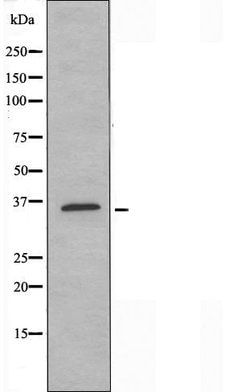
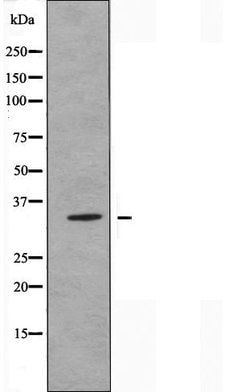
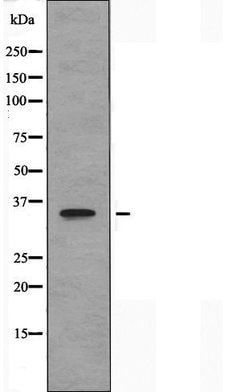
- Antibody detects endogenous levels of total OR5D3
- Olfactory receptors interact with odorant molecules in the nose, to initiate a neuronal response that triggers the perception of a smell
- The olfactory receptor proteins are members of a large family of G-protein-coupled receptors (GPCR) arising from single coding-exon genes
- Olfactory receptors share a 7-transmembrane domain structure with many neurotransmitter and hormone receptors and are responsible for the recognition and G protein-mediated transduction of odorant signals
- The olfactory receptor gene family is the largest in the genome
- The nomenclature assigned to the olfactory receptor genes and proteins for this organism is independent of other organisms.