EEF1D Polyclonal Antibody, Invitrogen™
Manufacturer: Thermo Scientific
Select a Size
| Pack Size | SKU | Availability | Price |
|---|---|---|---|
| Each of 1 | PIPA5102619-Each-of-1 | In Stock | ₹ 46,502.50 |
PIPA5102619 - Each of 1
In Stock
Quantity
1
Base Price: ₹ 46,502.50
GST (18%): ₹ 8,370.45
Total Price: ₹ 54,872.95
Antigen
EEF1D
Classification
Polyclonal
Conjugate
Unconjugated
Gene
EEF1D
Gene Alias
antigen NY-CO-4; EEF 1D; Eef1d; EF 1 delta; EF 1D; EF1D; EF-1D; EF-1-delta; Elongation factor 1-delta; eukaryotic translation elongation factor 1 delta; eukaryotic translation elongation factor 1 delta (guanine nucleotide exchange protein); FP1047; guanine nucleotide exchange protein; translation elongation factor 1-delta subunit
Host Species
Rabbit
Purification Method
Affinity chromatography
Regulatory Status
RUO
Gene ID (Entrez)
1936, 300033, 66656
Content And Storage
-20°C
Form
Liquid
Applications
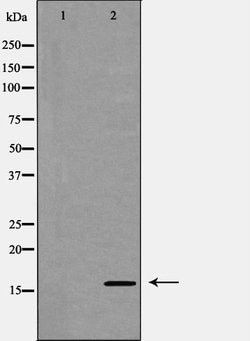
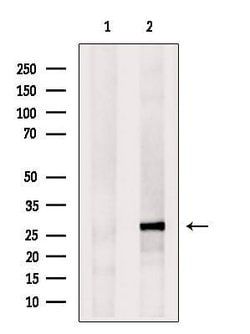
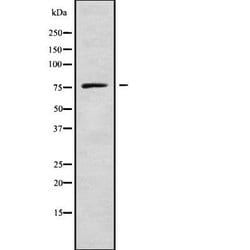
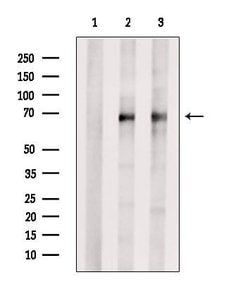
Immunohistochemistry (Paraffin), Western Blot
Concentration
1 mg/mL
Formulation
PBS with 50% glycerol and 0.02% sodium azide; pH 7.4
Gene Accession No.
P29692, P57776, Q68FR9
Gene Symbols
EEF1D
Immunogen
A synthesized peptide derived from human EEF1D(Accession P29692), corresponding to amino acid residues P32-V82.
Quantity
100 μL
Primary or Secondary
Primary
Target Species
Human, Mouse, Non-human Primate, Rat
Product Type
Antibody
Isotype
IgG
Related Products

Description
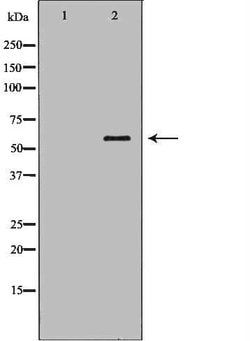
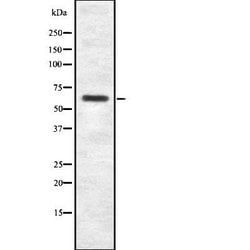
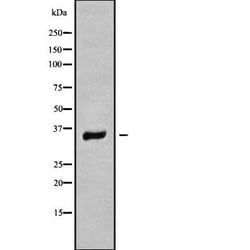
- Antibody detects endogenous levels of total EEF1D
- This gene encodes a subunit of the elongation factor-1 complex, which is responsible for the enzymatic delivery of aminoacyl tRNAs to the ribosome
- This subunit functions as guanine nucleotide exchange factor
- It is reported that this subunit interacts with HIV-1 Tat, and thus it represses the translation of host-cell, but not HIV-1, mRNAs
- Several alternatively spliced transcript variants encoding multiple isoforms have been found for this gene.