CFHR1 Polyclonal Antibody, Invitrogen™
Manufacturer: Thermo Scientific
Select a Size
| Pack Size | SKU | Availability | Price |
|---|---|---|---|
| Each of 1 | PIPA5102655-Each-of-1 | In Stock | ₹ 46,502.50 |
PIPA5102655 - Each of 1
In Stock
Quantity
1
Base Price: ₹ 46,502.50
GST (18%): ₹ 8,370.45
Total Price: ₹ 54,872.95
Antigen
CFHR1
Classification
Polyclonal
Conjugate
Unconjugated
Gene
CFHR1
Gene Alias
AI194696; CFHL; Cfhl1; CFHL1P; CFHR1; CFHR1P; CFHRB; complement component factor h-like 1; complement factor H related 1; complement factor H-related 1; complement factor H-related 1 pseudogene; complement factor H-related protein; complement factor H-related protein 1; FHR1; FHR-1; H factor (complement)-like 1; H factor (complement)-like 2; h factor-like protein 1; H36; H36-1; H36-2; H-factor-like 1; HFL1; HFL2
Host Species
Rabbit
Purification Method
Affinity chromatography
Regulatory Status
RUO
Gene ID (Entrez)
289057, 3078, 50702
Content And Storage
-20°C
Form
Liquid
Applications
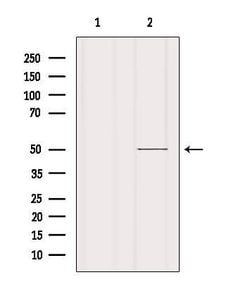
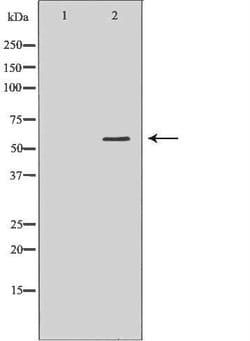
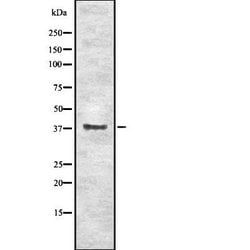
Immunohistochemistry (Paraffin), Western Blot
Concentration
1 mg/mL
Formulation
PBS with 50% glycerol and 0.02% sodium azide; pH 7.4
Gene Accession No.
Q03591
Gene Symbols
CFHR1
Immunogen
A synthesized peptide derived from human CFHR1(Accession Q03591), corresponding to amino acid residues E274-Y324.
Quantity
100 μL
Primary or Secondary
Primary
Target Species
Human, Mouse, Rat
Product Type
Antibody
Isotype
IgG
Related Products

Description
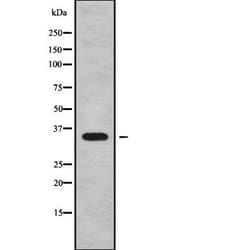
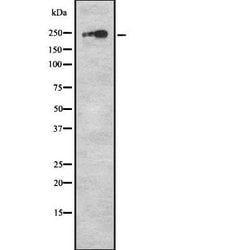
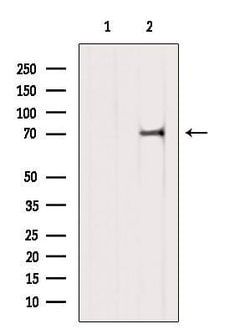
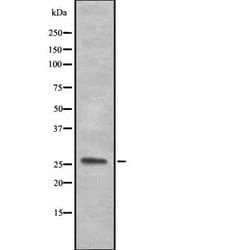
- Antibody detects endogenous levels of total CFHR1
- This gene encodes a secreted protein belonging to the complement factor H protein family
- It binds to Pseudomonas aeruginosa elongation factor Tuf together with plasminogen, which is proteolytically activated
- It is proposed that Tuf acts as a virulence factor by acquiring host proteins to the pathogen surface, controlling complement, and facilitating tissue invasion
- Mutations in this gene are associated with an increased risk of atypical hemolytic-uremic syndrome.