PIPA5102797
KLC1 Polyclonal Antibody, Invitrogen™
Manufacturer: Thermo Scientific
Select a Size
| Pack Size | SKU | Availability | Price |
|---|---|---|---|
| Each of 1 | PIPA5102797-Each-of-1 | In Stock | ₹ 46,502.50 |
PIPA5102797 - Each of 1
In Stock
Quantity
1
Base Price: ₹ 46,502.50
GST (18%): ₹ 8,370.45
Total Price: ₹ 54,872.95
Antigen
KLC1
Classification
Polyclonal
Conjugate
Unconjugated
Gene
KLC1
Gene Alias
AI874768; kinesin 2; kinesin 2 60/70kDa; kinesin light chain 1; Kinesin2; Klc; KLC 1; Klc1; KNS 2; KNS 2A; Kns2; KNS2A; medulloblastoma antigen MU-MB-2.50; MGC15245
Host Species
Rabbit
Purification Method
Affinity chromatography
Regulatory Status
RUO
Gene ID (Entrez)
16593, 171041, 3831
Content And Storage
-20°C
Form
Liquid
Applications
Immunocytochemistry, Immunohistochemistry (Paraffin), Western Blot
Concentration
1 mg/mL
Formulation
PBS with 50% glycerol and 0.02% sodium azide; pH 7.4
Gene Accession No.
O88447, P37285, Q07866
Gene Symbols
KLC1
Immunogen
A synthesized peptide derived from human KLC1(Accession Q07866), corresponding to amino acid residues S134-E184.
Quantity
100 μL
Primary or Secondary
Primary
Target Species
Human, Mouse, Rat
Product Type
Antibody
Isotype
IgG
Related Products
Description
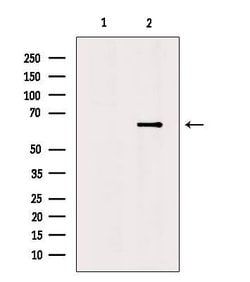
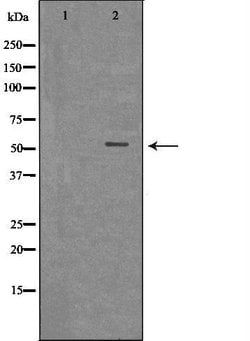
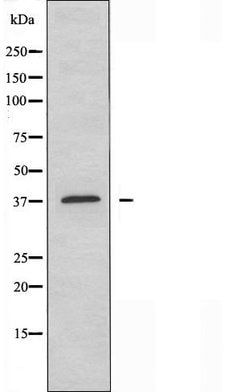
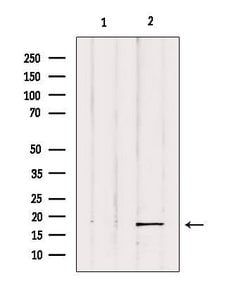
- Antibody detects endogenous levels of total KLC1
- Conventional kinesin is a tetrameric molecule composed of two heavy chains and two light chains, and transports various cargos along microtubules toward their plus ends
- The heavy chains provide the motor activity, while the light chains bind to various cargos
- This gene encodes a member of the kinesin light chain family
- It associates with kinesin heavy chain through an N-terminal domain, and six tetratricopeptide repeat (TPR) motifs are thought to be involved in binding of cargos such as vesicles, mitochondria, and the Golgi complex
- Thus, kinesin light chains function as adapter molecules and not motors per se
- Although previously named "ekinesin 2"e, this gene is not a member of the kinesin-2 / kinesin heavy chain subfamily of kinesin motor proteins
- Extensive alternative splicing produces isoforms with different C-termini that are proposed to bind to different cargos; however, the full-length nature of some of these variants has not been determined.