CRYBB2 Polyclonal Antibody, Invitrogen™
Manufacturer: Thermo Scientific
Select a Size
| Pack Size | SKU | Availability | Price |
|---|---|---|---|
| Each of 1 | PIPA5102805-Each-of-1 | In Stock | ₹ 46,502.50 |
PIPA5102805 - Each of 1
In Stock
Quantity
1
Base Price: ₹ 46,502.50
GST (18%): ₹ 8,370.45
Total Price: ₹ 54,872.95
Antigen
CRYBB2
Classification
Polyclonal
Conjugate
Unconjugated
Gene
Crybb2
Gene Alias
Beta crystallin B2; Beta crystallin Bp; beta-B2 crystallin; Beta-crystallin B2; beta-crystallin Bp; CCA 2; CCA2; CRYB B2; CRYB2; Cryb-2; CRYB2A; CRYBB 2; CRYBB2; crystallin beta B2; crystallin, beta B2; CTA-221G9.7; CTRCT3; D22S665; eye lens structural protein; OTTHUMP00000198622; R.norvegicus CRYBB2 gene (crystallin, beta B2)
Host Species
Rabbit
Purification Method
Affinity chromatography
Regulatory Status
RUO
Gene ID (Entrez)
12961, 1415, 25422
Content And Storage
-20°C
Form
Liquid
Applications
Immunohistochemistry (Paraffin), Western Blot
Concentration
1 mg/mL
Formulation
PBS with 50% glycerol and 0.02% sodium azide; pH 7.4
Gene Accession No.
P43320, P62696, P62697
Gene Symbols
Crybb2
Immunogen
A synthesized peptide derived from human CRYBB2(Accession P43320), corresponding to amino acid residues G61-L111.
Quantity
100 μL
Primary or Secondary
Primary
Target Species
Human, Mouse, Rat
Product Type
Antibody
Isotype
IgG
Related Products
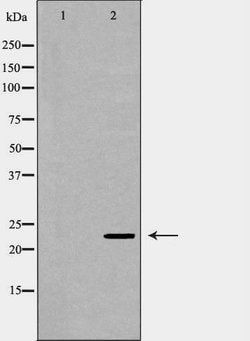
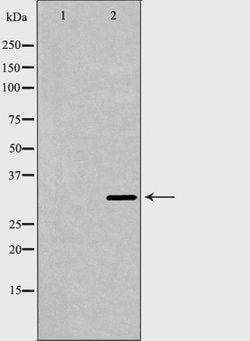
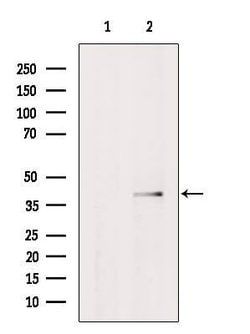
Description
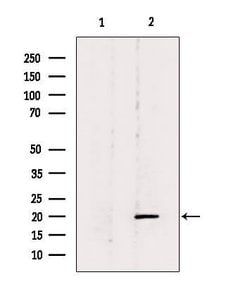
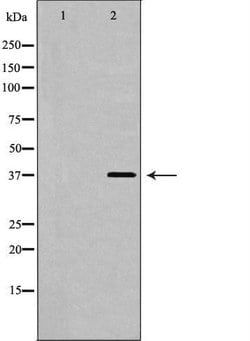
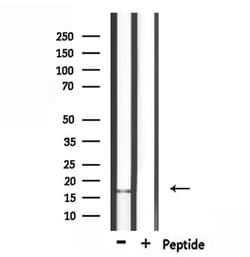
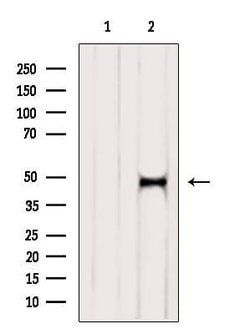
- Antibody detects endogenous levels of total CRYBB2
- Crystallins are separated into two classes: taxon-specific, or enzyme, and ubiquitous
- The latter class constitutes the major proteins of vertebrate eye lens and maintains the transparency and refractive index of the lens
- Since lens central fiber cells lose their nuclei during development, these crystallins are made and then retained throughout life, making them extremely stable proteins
- Mammalian lens crystallins are divided into alpha, beta, and gamma families; beta and gamma crystallins are also considered as a superfamily
- Alpha and beta families are further divided into acidic and basic groups
- Seven protein regions exist in crystallins: four homologous motifs, a connecting peptide, and N- and C-terminal extensions
- Beta-crystallins, the most heterogeneous, differ by the presence of the C-terminal extension (present in the basic group, none in the acidic group)
- Beta-crystallins form aggregates of different sizes and are able to self-associate to form dimers or to form heterodimers with other beta-crystallins
- This gene, a beta basic group member, is part of a gene cluster with beta-A4, beta-B1, and beta-B3
- A chain-terminating mutation was found to cause type 2 cerulean cataracts.