ING3 Polyclonal Antibody, Invitrogen™
Manufacturer: Thermo Scientific
Select a Size
| Pack Size | SKU | Availability | Price |
|---|---|---|---|
| Each of 1 | PIPA5102988-Each-of-1 | In Stock | ₹ 46,502.50 |
PIPA5102988 - Each of 1
In Stock
Quantity
1
Base Price: ₹ 46,502.50
GST (18%): ₹ 8,370.45
Total Price: ₹ 54,872.95
Antigen
ING3
Classification
Polyclonal
Conjugate
Unconjugated
Gene
ING3
Gene Alias
1300013A07Rik; Eaf 4; Eaf4; FLJ20089; HSPC301; ING 2; ING 3; ING2; ING3; ing3 protein; inhibitor of growth family member 3; inhibitor of growth family, member 3; inhibitor of growth protein 3; inhibitor of growth protein 3-like protein; MEAF4; p47 p47 ING3; p47 regulator protein; p47ING3; p47ING3 protein; zgc:56327
Host Species
Rabbit
Purification Method
Affinity chromatography
Regulatory Status
RUO
Gene ID (Entrez)
312154, 54556, 71777
Content And Storage
-20°C
Form
Liquid
Applications
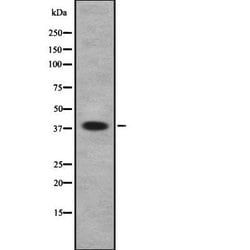
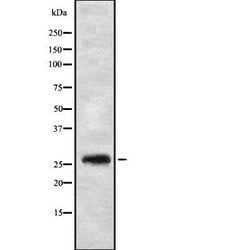
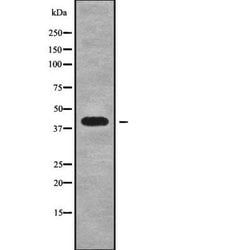
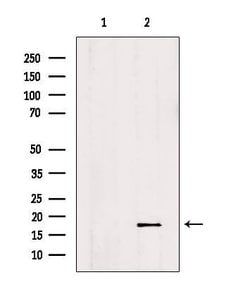
Immunohistochemistry (Paraffin), Western Blot
Concentration
1 mg/mL
Formulation
PBS with 50% glycerol and 0.02% sodium azide; pH 7.4
Gene Accession No.
Q498T3, Q8VEK6, Q9NXR8
Gene Symbols
ING3
Immunogen
A synthesized peptide derived from human ING3(Accession Q9NXR8), corresponding to amino acid residues V273-S323.
Quantity
100 μL
Primary or Secondary
Primary
Target Species
Human, Mouse, Rat
Product Type
Antibody
Isotype
IgG
Related Products
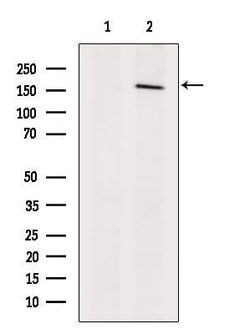
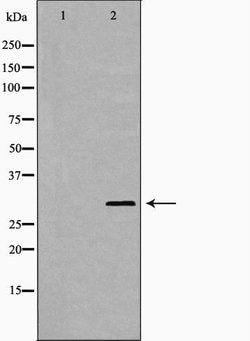
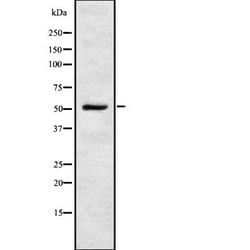
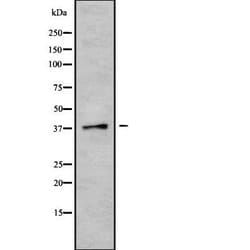
Description
- Antibody detects endogenous levels of total ING3
- The protein encoded by this gene is similar to ING1, a tumor suppressor protein that can interact with TP53, inhibit cell growth, and induce apoptosis
- This protein contains a PHD-finger, which is a common motif in proteins involved in chromatin remodeling
- This gene can activate p53 trans-activated promoters, including promoters of p21/waf1 and bax
- Overexpression of this gene has been shown to inhibit cell growth and induce apoptosis
- Allelic loss and reduced expression of this gene were detected in head and neck cancers
- Two alternatively spliced transcript variants encoding different isoforms have been observed.