PIPA5103313
BNC1 Polyclonal Antibody, Invitrogen™
Manufacturer: Thermo Scientific
Select a Size
| Pack Size | SKU | Availability | Price |
|---|---|---|---|
| Each of 1 | PIPA5103313-Each-of-1 | In Stock | ₹ 46,502.50 |
PIPA5103313 - Each of 1
In Stock
Quantity
1
Base Price: ₹ 46,502.50
GST (18%): ₹ 8,370.45
Total Price: ₹ 54,872.95
Antigen
BNC1
Classification
Polyclonal
Conjugate
Unconjugated
Gene
BNC1
Gene Alias
AI047752; AW546376; basonuclin 1; BNC; bnc 1; Bnc1; BSN1; HsT19447; zinc finger protein basonuclin-1
Host Species
Rabbit
Purification Method
Affinity chromatography
Regulatory Status
RUO
Gene ID (Entrez)
646
Content And Storage
-20°C
Form
Liquid
Applications
Immunohistochemistry (Paraffin), Western Blot
Concentration
1 mg/mL
Formulation
PBS with 50% glycerol and 0.02% sodium azide; pH 7.4
Gene Accession No.
Q01954
Gene Symbols
BNC1
Immunogen
A synthesized peptide derived from human BNC1(Accession Q01954), corresponding to amino acid residues S510-N560.
Quantity
100 μL
Primary or Secondary
Primary
Target Species
Human
Product Type
Antibody
Isotype
IgG
Related Products
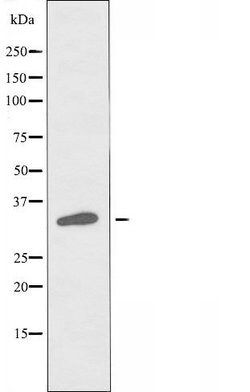
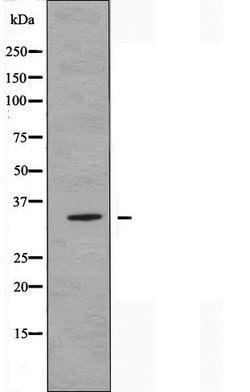
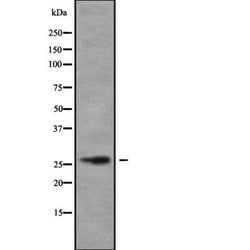
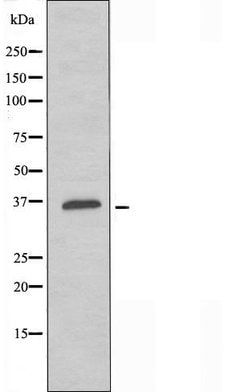
Description
- Antibody detects endogenous levels of total Basonuclin
- Bnc 1 is a 994 amino acid transcription factor specific for squamous epithelium and for the constituent keratinocytes at a stage either prior to or at the very beginning of terminal differentiation
- It is a zinc finger protein with three separated pairs of zinc fingers and a nuclear localization signal
- Bnc 1 is a soluble protein that can shuttle between the nucleus and the cytoplasm, and its location depends on the proliferative potential of the cell
- It is expressed relatively uniformly in the nucleoplasm, and phosphorylation on Ser-537 and Ser-541 leads to its cytoplasmic localization
- It is present in the basal cell layer of the epidermis, in hair follicles and also in abundance in the germ cells of testis and ovary, and to a lower extent in thymus, spleen, mammary glands, placenta, brain and heart
- Reports suggest that it plays a regulatory role in keratinocyte proliferation and also in rRNA transcription
- It is also known to play a role in the differentiation of spermatozoa and oocytes.